Dominance

Quotation

“The first man who, having fenced in a piece of land, said “This is mine,” and found people naïve enough to believe him, that man was the true founder of civil society. From how many crimes, wars, and murders, from how many horrors and misfortunes might not any one have saved mankind, by pulling up the stakes, or filling up the ditch, and crying to his fellows: Beware of listening to this impostor; you are undone if you once forget that the fruits of the earth belong to us all, and the earth itself to nobody.”

  Jean-Jacques Rousseau, Discourse on Inequality, 1754

Background
Some people have dominant personalities: their instinctive, automatic trait is to dominate others. Societies follow the same pattern. Since time immemorial some have intimidated, blackmailed, extorted, conquered, enslaved and even exterminated others to steal their resources.

Japan and Germany, two technologically advanced societies without domestic oil or gas resources, fought World War II to address that deficiency. Japan sought to take over the (then) Dutch East Indies, and Germany went after oil resources in the Caucasus and the Persian Gulf. Both failed. Japan lost its fleet and Germany was partitioned and occupied. Britain, all but bankrupt, lost its empire, and with it, any hope of maintaining naval parity with the U.S. As for the Soviet Union, its navy never had the capacity to project power globally. As a result, by the end of the war the U.S. had gained complete global naval hegemony.

Prior to, during, and immediately after the war, China was poor, powerless and prostrate. Although nominally a victor of sorts because its enemy, Japan, had been defeated, the former played no effective role in shaping the post-war world order. Shortly thereafter the civil war resumed between Chinese Communists and Nationalists; the latter lost and fled to Taiwan. On March 3, 1955 a defense pact between the U.S. and Taiwan, then known as the Republic of China, came into force. The U.S. terminated that treaty on January 1st, 1980, one year after establishing diplomatic relations with the People’s Republic of China, and enacted the Taiwan Relations Act, ambiguous legislation that neither guarantees nor relinquishes American assistance in the event of a Chinese attack on Taiwan. Originally the ambiguity was intended to dissuade Taiwan from declaring independence and China from boycotting, embargoing, or invading Taiwan. All these events preceded China’s meteoric economic and military rise.

Energy Aspects
China is the world’s largest energy consumer and producer in the world. Its dependency on foreign oil is at 70 percent, and it is expected to grow. South Korea, Japan and Western Europe, close American allies, are in a similar situation. Although heavily dependent on Russian gas, it is American power that has thus far all but guaranteed the Europeans with uninterrupted access to the oil they need. However, keenly aware that in the summer of 1941 the U.S. froze Japanese assets and stopped exporting oil and gasoline to it, China is determined to preclude a repetition of those events.

Many things have changed since the end of World War II, among them that U.S. proven oil reserves amount to about 5 years at current consumption levels, and that, as mentioned, 70 percent of China’s oil is imported. Thus, both countries share the same crucial predicament, small domestic oil reserves relative to consumption. That explains why both consider naval dominance a matter of national security.

Importance of Taiwan
There are three critical, rational reasons why Taiwan is so important to both the U.S. and China. The first is Taiwan’s strategic location. Chinese occupation would give it unchallenged “breakout” access to the Western Pacific, allow it to outflank Japan, and give it unrestrained access to Australia, New Zealand, Guam, and Antarctica. Given that climate change was not evident at the time when the Antarctic Treaty went into force, the frozen continent’s unexploited natural resources may become a new source of disputes after 2048, when the treaty expires.

The second reason is Taiwan’s semiconductor production capacity, largest in the world. Semiconductors are essential components of electronic devices running countless critical applications such as military systems, communications, clean energy, computing, and healthcare. Although semiconductors were invented in the U.S., and it still leads in cutting-edge design, it now relies heavily on production in Taiwan and South Korea. Were China to occupy Taiwan, the former might, at its discretion, reduce or even stop the flow of semiconductors to the U.S.

The third reason is America’s reputation. Given Taiwan’s importance, how would its many allies, including Japan, South Korea and NATO, react should the U.S. choose not to instantly come to Taiwan’s assistance in the event of a Chinese invasion?

Breaking the Impasse
China and the U.S. have legitimate oil-related concerns, but seeking dominance, ultimately a temporary status, is not going to assuage their predicament. On the contrary, it would be like jumping head first on a slippery slope to Thucydides’ trap. Accordingly, it’s high time to accept the new reality: American naval hegemony is being challenged like never before. By the same token, China ought not to seek to replace American dominance with its own. Instead, both should embark as soon as humanly possible on a cooperative program to: (a) produce green hydrogen from the ocean to meet their (and the world’s) current and future energy needs; (b) negotiate a timeframe to become self-sufficient in the manufacture of semiconductors and other strategic high tech products; (c) use Special Drawing Rights (SDRs) to replace the dollar as the reserve currency of the world, based not on a composite basket of selected currencies but on a formula that distributes SDRs to all countries based on their per capita production and consumption of hydrogen; (d) agree on a definite timeframe and protocol for an Anschluss between China and Taiwan; in exchange, China might agree to settle by neutral binding arbitration all outstanding territorial disputes with its neighbors and rescind its claim over international waters in the South China Sea.

About Us

Pandora's Box

The Concept

WikiSolver is a free collaborative depository of constructive, feasible, specific, detailed solutions to political and economic problems in the United States, and by extension, the world. Wikisolver is not affiliated with, nor endorsed by, any political party, religion, or special interest group.

The Reasons

The facts are undeniable. As a result of human action, our planet has a fever and a global mass-extinction of thousands of species throughout the entire biological spectrum is underway.  Either we change our ways radically -but gradually and imperceptibly- or future generations will pay dearly for our transgressions with their health and wealth, perhaps even with their very lives.

Energy

Fracking has caused a boom in domestic oil and natural gas output which is sure to increase exponentially as production is expanded to and in vast unexploited fields throughout the world. Competition and the law of supply and demand will keep prices low and encourage greater consumption at an accelerating rate, particularly in India and China as their per capita incomes improve. And it’s going to happen precisely when the world urgently needs to reduce, not increase, the production of greenhouse gases. For political and economic reasons, governments, including ours, are under heavy pressure to do what they can to create well-paying, middle-class man-jobs. Since fracking does precisely that, it is unrealistic to expect politicians to oppose it without a superior alternative at hand.

Water

Global warming has exacerbated drought that no amount of fracking can relieve, particularly in inland areas far from the ocean where desalination is impractical. Plan A (main menu, above) postulates that it is possible to use a never-before-tried method not under the control of any special interest to simultaneously and permanently eliminate drought at user-defined locations, generate a net surplus of exportable green energy, and create millions of well-paying middle class jobs that cannot be relocated or outsourced. Furthermore, Argentina, Chile, Peru, Guatemala, Mexico, New Zealand, Japan, Spain, Italy, France, Croatia, Serbia and Sweden, among others, also have competitive topographical, geographical and geological characteristics to do the same. At a minimum, it would help them achieve or maintain energy self sufficiency, create well-paying domestic jobs for their working classes, reduce their outflow of U.S. dollars, and generate profits by producing and selling the only energy carrier with zero carbon emissions -hydrogen- to potential user-buyers like China, India, the European Union and desert countries in Africa, Central Asia, and the Middle East. They would use it to simultaneously generate electricity without polluting the environment and manufacture pure water at a mutually beneficial cost/benefit ratio.

Inequality Gap

There’s also the issue of the yawning, growing gap in the distribution of current income and wealth, denounced by eminent economists and courageous elected leaders as a clear and present danger, not just to the United States but to other countries as well. We believe that while our featured solution should create jobs and reduce the high non-participation rate of the labor force, additional measures are indispensable to ensure that the fair share of future income and wealth of the middle class is not diverted to the top 1% of the population. Specifically, real estate reforms are necessary to encourage mass construction of single family homes for middle class individual borrowers so that mortgages can be paid off in 30 human-years (as was once the case when 30-year mortgages were introduced), not 60 or more human-years as is now commonly the case due to the high price of real estate relative to the median income of the middle class.

Conclusions

For reasons detailed in Plan A, the United States, though a land of extremes, is key to the solution. It still has the civil tranquility, global political/economic influence, and all the required natural and financial resources to implement it.  As for gridlock, a form of domestic cold war, it can be defused; not by cosmetic or half-measures that create additional problems and saddle subsequent generations with all of them, but by genuine common-sense facts and solutions.

This is a work in progress. Problems are added as they are solved.

Terms Of Service

GENERAL

Your use of WikiSolver is subject to the version of this Terms of Service (TOS) in effect at the time of your use. WikiSolver reserves the right, from time to time and without notice, to update and change the TOS.

Your use of WikiSolver site is also subject to the WikiSolver Privacy Policy in effect at the time of your use, which is incorporated herein as though set forth in full.

WikiSolver may preserve and disclose any content if required to do so by law or to: (I) comply with legal process; (II) enforce this TOS and the WikiSolver Privacy Policy; (III) respond to claims that any content violates the rights of any third party; or (IV) protect the rights, property, or personal safety of WikiSolver, its users and the public.

WikiSolver, in its sole discretion and at any time, may discontinue providing the WikiSolver Service, or any part thereof, with or without notice. WikiSolver will not be liable to you or any third party for any termination of the WikiSolver Service.

WikiSolver may provide, or third parties may provide, links to other websites not owned or operated by WikiSolver. Because WikiSolver has no control over their content, WikiSolver does not endorse, and is therefore not responsible or liable, for any content from such websites. WikiSolver will not be responsible or liable, directly or indirectly, for any damage or loss caused, or alleged to be caused by, or in connection with use of or reliance on, such websites.

This TOS and the relationship between you and WikiSolver will be governed by the laws of the State of California. You and WikiSolver agree to submit to the personal and exclusive jurisdiction of the courts located in Los Angeles, California with regard to any and all disputes arising for any reason and in any manner from the WikiSolver website.

The failure of WikiSolver to exercise or enforce any right or provision of this TOS will not constitute a waiver of such right or provision. This TOS constitutes the entire agreement between you and WikiSolver and governs your use of the WikiSolver website. Should any provision of this TOS be found by a court of competent jurisdiction to be invalid, the parties agree that the court should endeavor to give effect to the parties’ intentions as reflected in the provision, and that the other provisions of this TOS remain in full force and effect.

Regardless of any statute or law to the contrary, any claim or cause of action arising out of or related to use of the WikiSolver site, or this TOS must be filed within one (1) year after such claim or cause of action arose or be forever barred.

COLLABORATING AUTHORS

WikiSolver does not claim ownership over the content you post on the WikiSolver site. After posting your content, you continue to retain ownership of your content and you continue to have the right to use and license your content in any way you see fit. But by using the WikiSolver site you are granting WikiSolver a perpetual, nonexclusive, worldwide, royalty-free, transferable right and license to use, reproduce, distribute, and publicly display your content. WikiSolver may end this license, in its sole discretion, by deleting your post without notice and for any reason.

WikiSolver does not want to receive confidential or proprietary information from anyone as a result of any post submitted for publication.

WikiSolver and its designees will have the right, but not the obligation, to refuse or remove any content submitted for post.

WikiSolver is hosted in the United States. If you post information to WikiSolver from outside of the United States, you are agreeing that WikiSolver’s collection, use, storage and sharing of that content is exclusively subject to the laws of the United States, not of the jurisdiction in which you are located.

END USERS

The content in WikiSolver has not been examined or verified by any specialist or expert in any of the disciplines addressed in the posts. The information in the posts is intended as reference and as a starting point for further evaluation and research. Users of these posts will evaluate, bear all risks, and hold WikiSolver and its collaborators, partners, or anyone else related to WikiSolver, directly or indirectly, harmless from any claim or demand made by anyone due to, or arising out of, such use, including, but not limited to, any and all attorneys’ fees.

Notice is hereby given that some or all of the content in WikiSolver may be offensive or objectionable to certain beliefs or ideologies. Under no circumstances will WikiSolver be liable in any way for any content, including, but not limited to, for any errors or omissions, or for any loss or damage of any kind incurred as a result of the use of any content posted, transmitted or otherwise made available via WikiSolver.

Last updated March 7, 2025

Size Of The Canal

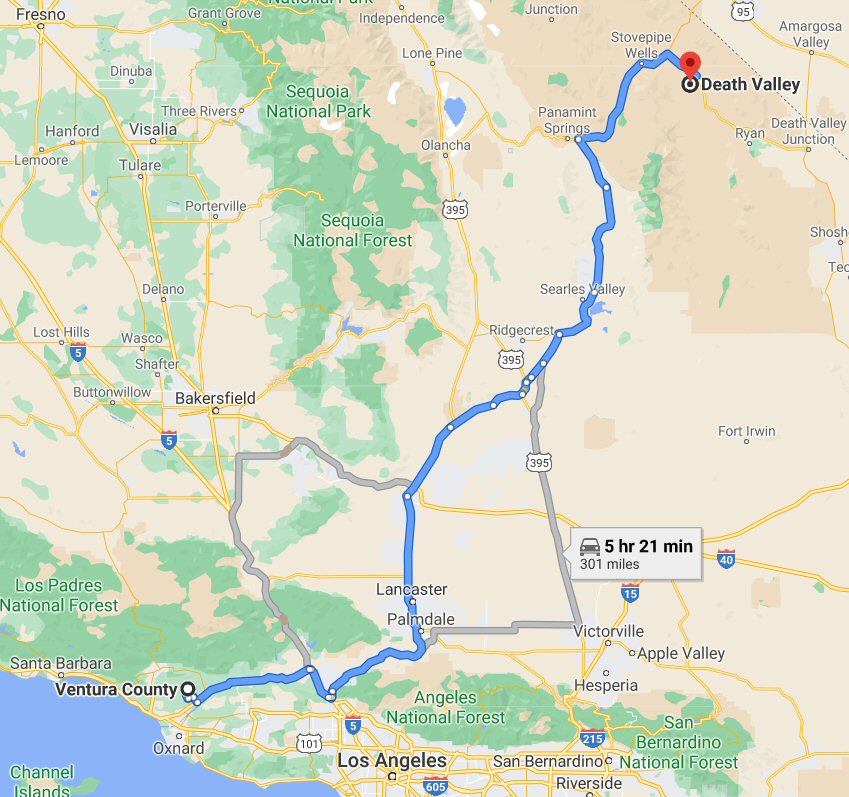
The length of a canal from the Pacific to Death Valley would be about 200 miles, similar to the Turkish Straits -from the southern end of the Dardanelles to the northern end of the Bosporus. The Black Sea is 56.2 times larger (168,500 sq mi) and 25.7 times deeper (7,257 ft) than Death Valley; due to river water it receives from large Eurasian fluvial systems, including the Don, the Dnieper and the Danube, the Black Sea’s water balance is positive (more water flows from the Black Sea to the Mediterranean than the other way around), cooler, less saline and less dense than the Sea of Marmara. These differences generate a deep anoxic flow with a volume equivalent to the sixth largest river on Earth if it were on land. The minimum width of the Bosporus is approximately 765 yards (2,295 ft); its average depth, 213 feet.

There are no fluvial systems flowing into Death Valley, therefore its water balance would be negative and flow in only one direction –from the Pacific. Accordingly, the canal’s capacity would have to be large enough to instantly replenish the water that the system would constantly lose due to evaporation, distribution, desalinization and electrolysis.

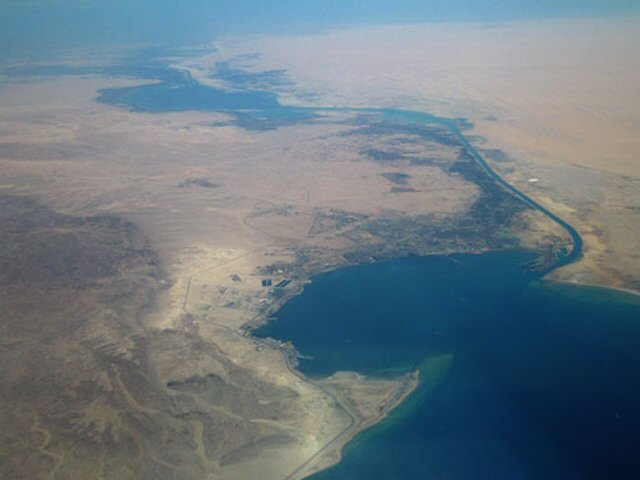
The magnitude of this enterprise due to the mountainous terrain would dwarf the Panama and Suez canals combined, however it should be noted that both were built long ago with obsolete equipment and technology to accommodate much smaller ships. With today’s equipment, it would still be enormously difficult and expensive, however the alternative of not doing anything is much worse. Not only would that eliminate the need for pipelines, inland ports could be built to export the hydrogen and other products.


The Opium Trade

The opium trade of the 18th and 19th centuries was Britain’s solution to its chronic trade deficit with China. The reason for the deficit was an extraordinarily high demand for Chinese commodities in Europe and little or no demand for European goods in China. The problem was compounded because the only commodity that China accepted in payment was silver, preferably Spanish Carolus coins.  Prior to 1810 the British had been able to obtain the coins primarily through trade, however beginning that year Spain’s supply of silver began to decline -and finally ended- when its American colonies gained their independence.

Faced with dwindling reserves, the British searched for a commodity with which to pay the Chinese. Their solution was to buy cheap opium from their Indian and Burmese possessions and sell it to Chinese addicts. By the late 1830s British and American vessels were landing 30,000 chests annually, and the number of addicts grew to 12 million.

In 1839, when the Chinese Emperor attempted to halt the trade, the first Sino-British Opium War began. Following its defeat, China granted Britain most-favored nation status for trade, ceded the island of Hong Kong,  accepted the principle of extraterritoriality -whereby British merchants would no longer be held accountable to Chinese laws- and opened Shanghai, Canton, Ningbo, Foochow and Amoy to western trade. In 1844 the United States and France extracted similar concessions.

In 1854 the British further demanded that China open all its ports to foreign trade, legalize the importation of opium from British India and Burma, and exempt British goods from all import duties. In 1857, when the Chinese demurred, British and American warships were sent to Canton, and France and Russia joined. Following its second defeat, China ceded the port of Kowloon to Britain, agreed to export indentured Chinese laborers to the United States and Canada, and legalized the importation of opium.

Reflections

The Thinker 2

“Misunderstanding of the present grows fatally from ignorance of the past” -Marc Leopold Bloch


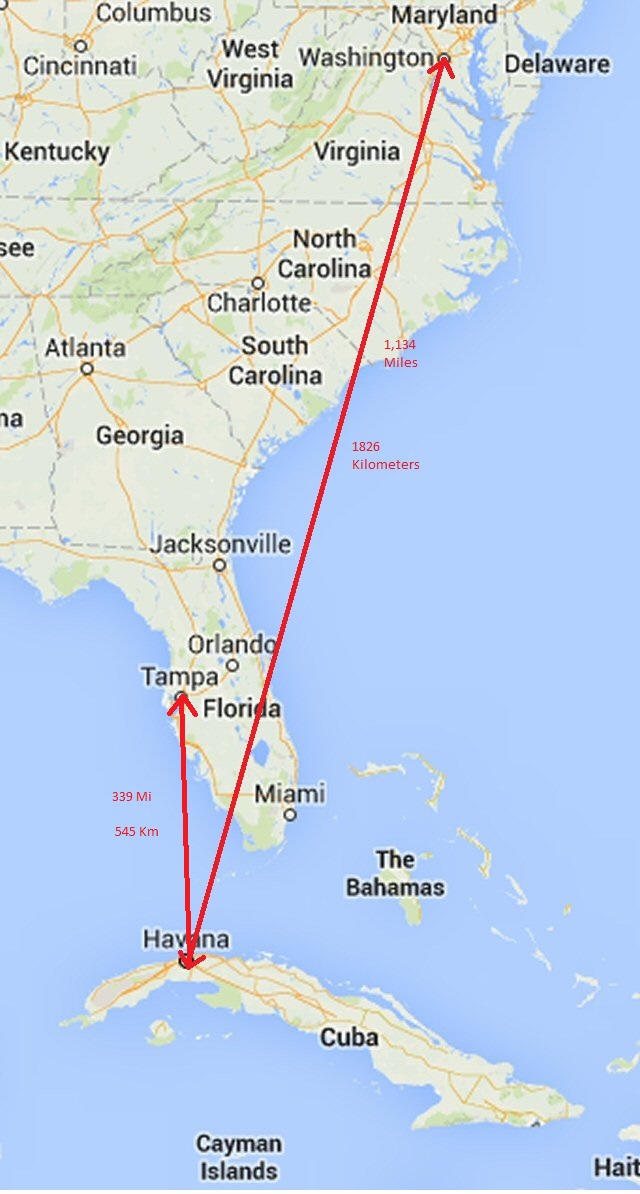
1962 – Cold War I

Havana-Washington

The end of Cold War I, widely viewed in the west as proof of the innate superiority of capitalism over communism, led some to believe that the disappearance of ideological antagonism between the United States and Russia, the Soviet Union’s successor, would yield “peace dividends.”  With the issue settled and the consequent diminished probability of a nuclear war between the former foes, so the argument went, it seemed logical to assume that America’s defense budget would be demobilized from the war footing it had been on since World War II.

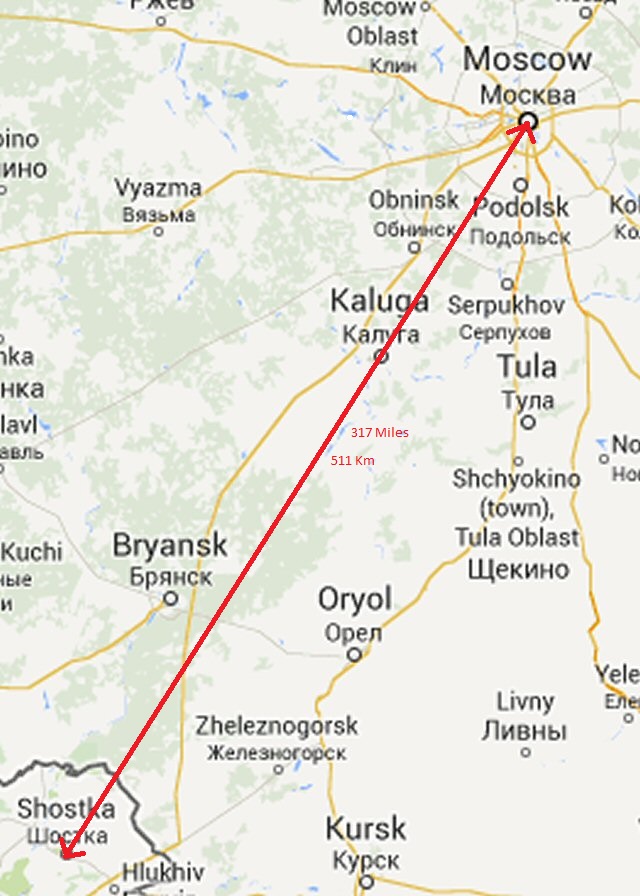
2014 – Cold War 2?

Moscow-Shostka

As we know, that has yet to happen. In 2013 U.S. defense-related expenditure was approximately $640 billion, exceeding China ($188B), Russia ($87B), Saudi Arabia ($67B), France ($61.2B), Britain ($57.9B), Germany ($48.8B), India ($47.4B), and South Korea ($33.9B) combined, and significantly more than the Congressional Budget’s Office 2014 projected deficit of $514B.

State-sponsored communism imploded because its fundamental tenet –perpetual self-sacrifice of the individual for the benefit of the state- is anathema to human nature. No doubt other species with highly structured and –it is duly noted- very successful societies might agree with it, but human beings are keenly aware of their mortality and short youth, and most yearn for the freedom and means to make their lives worth living while it matters. Except for the truly saintly, few willingly make vows of poverty or accept a perpetual state of subservience. No, capitalism did not defeat communism. Communism self destructed because it failed to deliver.

Accordingly, on the 100th anniversary of the beginning of World War I, with all its lessons the world has yet to heed, it seems in right order to review how capitalism has performed relative to the middle and working classes since that fateful night when East Berliners scaled and sat on the infamous wall. Scores of charts and data on the distribution of wealth and income indicate that the rich got richer and the poor poorer, that the trend continues unabated and that it is accelerating. At this rate, the day will come when there will be little or no difference between capitalism and communism with respect to the distribution of income and wealth.

Overwhelming wealth conveys near absolute power, and absolute power corrupts absolutely; worse, wealth tolerates no dissent because it exists only to perpetually replicate itself even though it exists in a finite world with a growing population. Clearly we can have either a plutocracy or a democracy, but we can’t have both. Unsurprisingly, many of today’s rivalries, intrigues and conspiracies coalesce around domination –though not necessarily outright ownership- of the world’s gas and oil reserves and the global financial system. Whoever succeeds in doing so will rule the world for the foreseeable future.

The rise of the global economy and global warming accelerated concurrently with the demise of institutionalized communism and its aftermath, and for the vast majority of people everywhere the result has been nothing less than catastrophic:

1) A wealth gap so wide, according to numbers compiled by Credit Suisse in its latest World Wealth report, that the top 1% control 46% of the world’s assets, and 86% of global wealth is owned by the richest 10%; in the U.S., the richest 1% own more than 35% of the country’s wealth, while the bottom 50% together share just 2.5%. In demographic terms, the 400 richest Americans are wealthier than the bottom 150 million Americans put together.
2) Global warming. There is an ongoing mass die out of land and marine species directly attributable to it, and no one knows what the consequences will be. The ocean, which absorbs about one-third of all human-caused carbon dioxide emissions at a rate of 300 tons per second, is now 30 percent more acidic than before the Industrial Revolution. This has harmed marine food webs with all the ripple effect that it entails.
3) Water. Rising demand and climate change will exacerbate water problems worldwide. By mid century the world’s population is expected to reach 9.6 billion. As a result, the demand for water is likely to increase by 55%, exacerbating the already very severe shortages. That may very well lead to wars, famine and other disasters.

Most politicians, economists and scientists agree that these issues are unsustainable, unacceptable and extremely dangerous, yet so far no one has outlined a specific, feasible plan to resolve all three simultaneously. Some suggest reforming the tax code, an understatement to say the least, as if that were the equivalent of restoring the millions of well-paying middle class jobs that were outsourced over the last forty years. Others choose to highlight the number of jobs created since the end of the Great Recession but fail to mention that:

  • Well in excess of 40% of them are low paying retail jobs.
  • Today’s autoworkers in the U.S. are paid about half of what their parents used to make.
  • The labor participation rate stands at just over 62%, the lowest ever.
  • The nation’s home ownership rate in the first quarter of 2014 fell to 64.8%, the lowest   in  19 years.
  • The pace of rent increases over the past decade has been double the growth in incomes.
  • New construction of small, 2-bedroom single family homes for first-time buyers in non-wealthy areas is practically nonexistent.
  • The total debt of the federal government at the end of fiscal 2013 -including both the debt held by the public and the intragovernmental debt- was $16.72 trillion. The Congressional Budget Office estimates that by 2024, the total debt of the federal government will be $27.16 trillion—of which $20.95 trillion will be debt held by the public. In simple terms, over the long run deficits will rise to unsustainable levels relative to the economy.
  • Industry estimates of long-range energy demand suggest oil and natural gas will remain essential growing sources of energy in the coming decades despite international efforts to reduce greenhouse emissions. Natural gas, which emits roughly half the carbon dioxide as coal but which is roughly 75% methane, a far more potent greenhouse gas than carbon dioxide, is expected to grow faster than any other fuel type; therefore its chemical composition and growing demand, particularly in China and India, should result in higher net emissions of greenhouse gases.

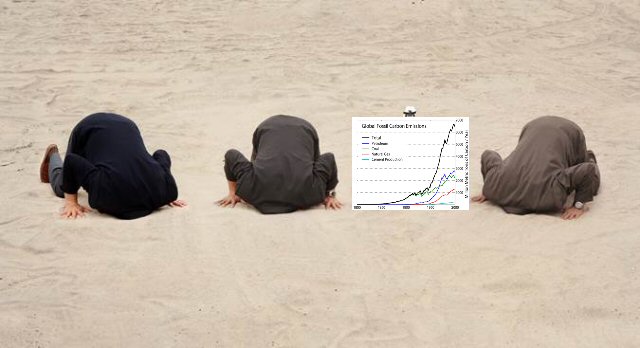
The situation is too far gone for cosmetic, half-hearted tweaks. It calls for fundamental, drastic structural changes, which are in any case inevitable. The only question is whether our elected representatives can summon the willpower and courage to take meaningful action to achieve a soft landing. The alternative -doing nothing of consequence- borders on suicidal.

Plan A: The Andes

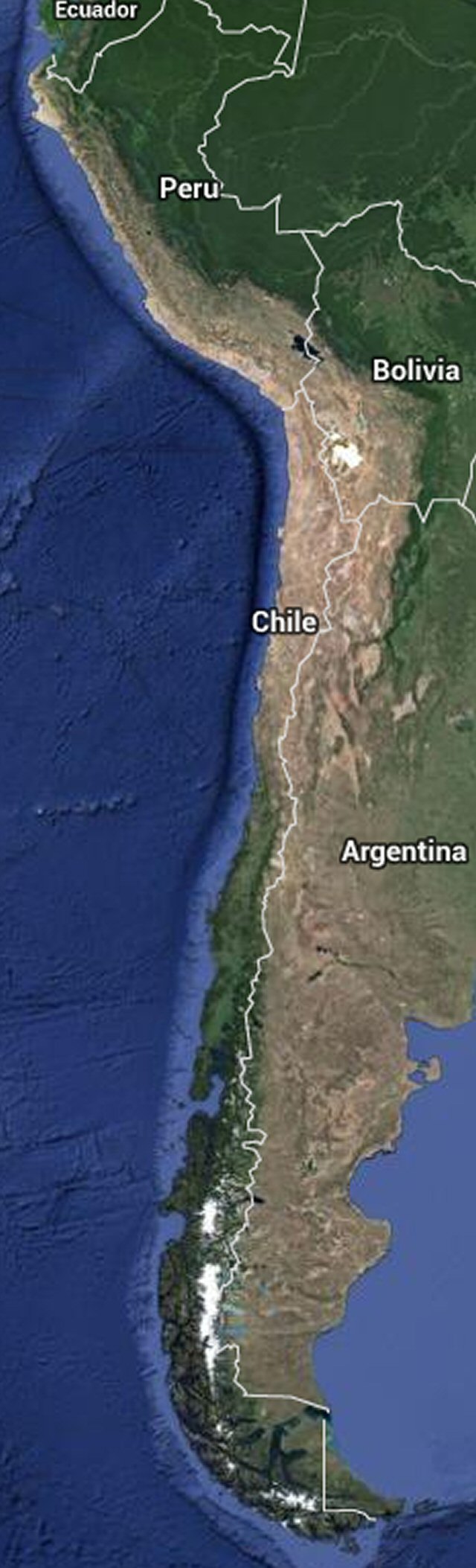
The Andes extend 7,000 kilometers (4,349 miles), from Venezuela to Chile.

The Andes region
The Andes region

Nowhere else on Earth is there another mountain range adjacent to the ocean and of this length and height.

Andes & Ocean #1

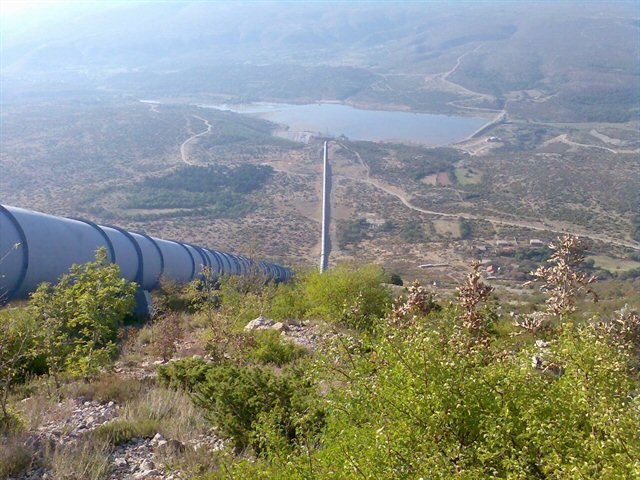
The ocean’s close proximity to the Andes means solar powered plants could be built on or close to the shore to produce green hydrogen by electrolysis. Hydrogen, not water, would be pumped up to them. Some of the peaks exceed 20,000 feet.

Hydrogen Pipeline

There, hydrogen-burning power plants would be built.

Hydrogen Plant

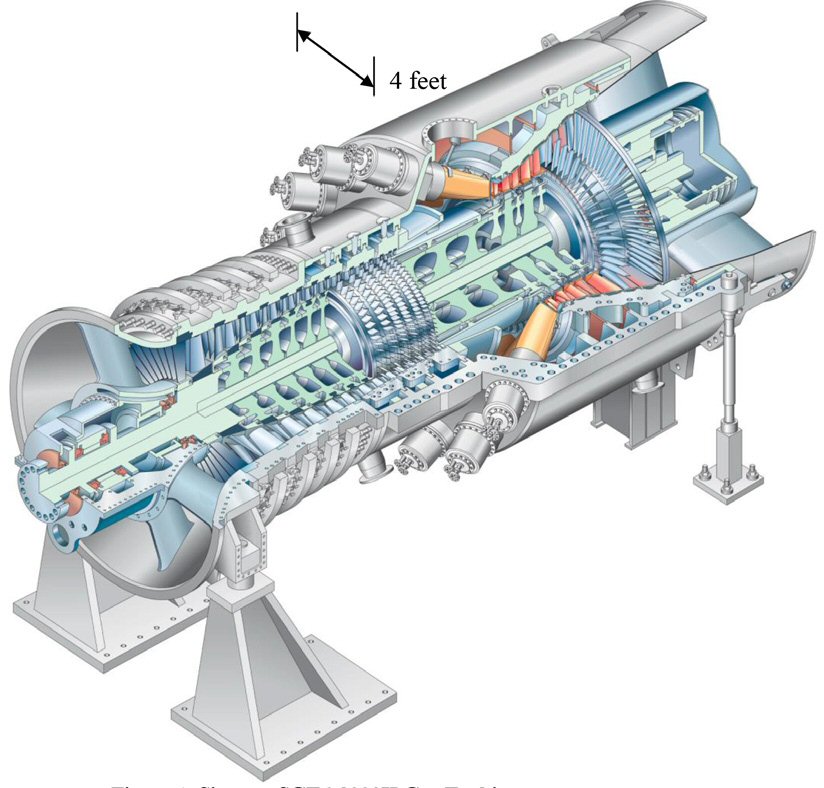
The plants would use advanced hydrogen turbines that do not require fuel cells.

Siemens Turbine

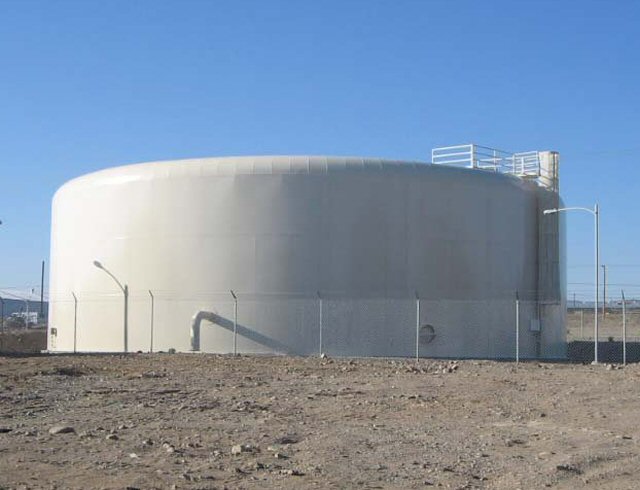
When hydrogen is burned, water vapor is produced. Instead of letting it dissipate, it would be condensed and stored.

Water reservoir

Terraces would be carved below the hydrogen plants.

Terraced Mountain

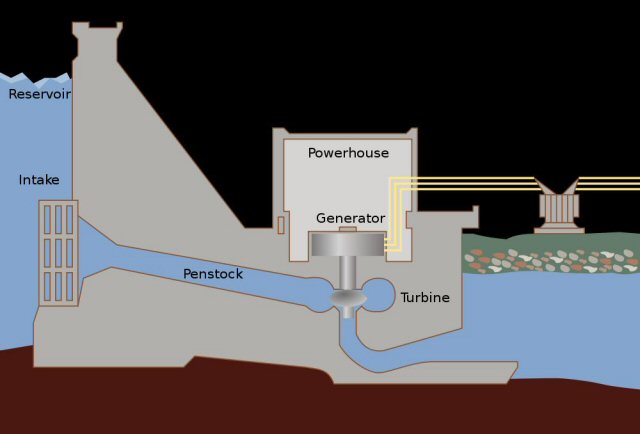
Each level would have hydroelectric turbines powered by the water produced by the hydrogen plants above them.

Hydro Generator

The combined electricity generated by all the hydro turbines driven by the same pressurized water (aquafacture) cascading down thousands of feet should greatly exceed the energy spent in the electrolysis process. A portion of the surplus electricity could be used to produce more hydrogen to fire up other arrays; surplus hydrogen would be exported to clients anywhere in the world. Theoretically, clients should be able to replicate the system at a site of their choosing, however they would still depend on a steady supply of imported hydrogen.

Plan A: Mexico

Mexico

While the U.S. meets all the requirements to build a vast aquafacture-based economic infrastructure, Mexico also has comparable but less capital-demanding features with which to implement Plan A.

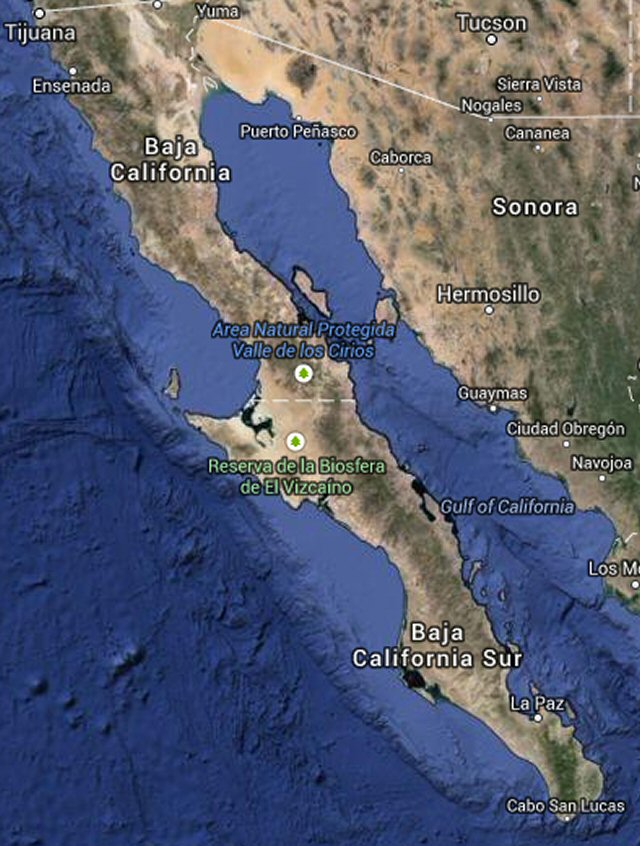
Baja California
Baja California

The Gulf of California –wholly Mexican- eliminates the need to dig a canal, and its two sparsely populated coastlines have abundant sunlight the year round.

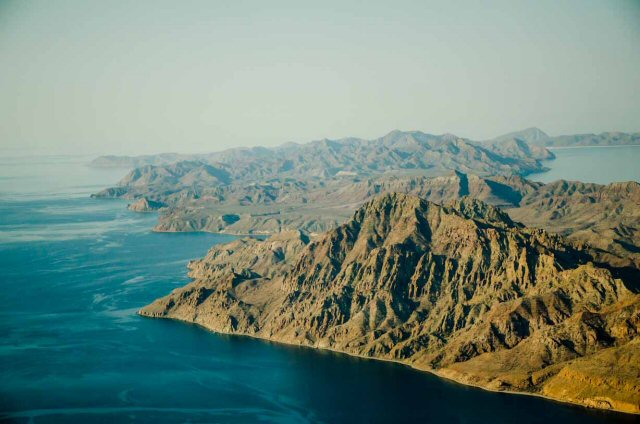
Islands & mountains
Islands & mountains

There are mountainous islands, and the peninsula proper, over 1,000 miles long, also has a steep mountain range in the middle.

But what makes Mexico a leading candidate to become a global hydrogen producer is the need to balance its trade deficit with China, to create millions of well-paying jobs, and to replace the revenue it will lose when its oil reserves are gone. According to statistics from Mexico’s Department of Economy, in 2012 it exported $5.7 billion and imported almost $57 billion from China, a ten-fold imbalance that even the Chinese seek to redress. Accordingly, in April 2013 Pemex signed its first long-term contract to ship 30,000 barrels of oil a day to Sinopec, China’s state oil company, and Mexico’s administration has indicated that it will soon introduce legislation to allow greater international investment in its oil sector, currently a state monopoly. This is implicit recognition of the fact that Mexico needs foreign capital and expertise to search for and develop new oil and gas fields. But, should Mexico realize that hydrogen from electrolysis -a virtually unlimited resource- could be of great interest to nations whose domestic energy and/or water supplies are insufficient to meet domestic demand, it may consider developing it in earnest. One advantage Mexico has in the decision-making process over the U.S. is that it does not suffer from the same degree of gridlock.

Since the existing topographic features require little or no modification, and should the energy sector be opened to foreign investors, China and Japan, among others, would likely consider investing in the fuel of the future.

Plan A: Iberia

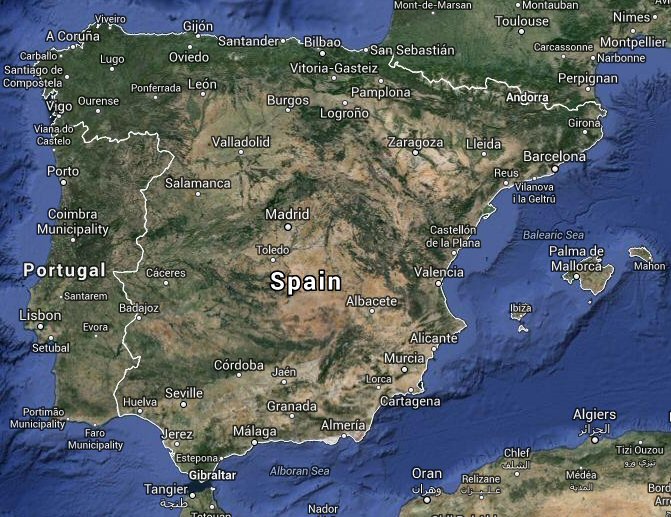
Sunny Spain and Portugal, surrounded by water on three sides. What if it they could use their sunlight, seawater and gravity to produce green hydrogen and simultaneously generate more electricity than is consumed in the process? Furthermore, what if they could export a (theoretically) unlimited amount of electricity to the rest of Europe and green hydrogen to distant, virtually insatiable energy and water markets such as China and India?

Iberia

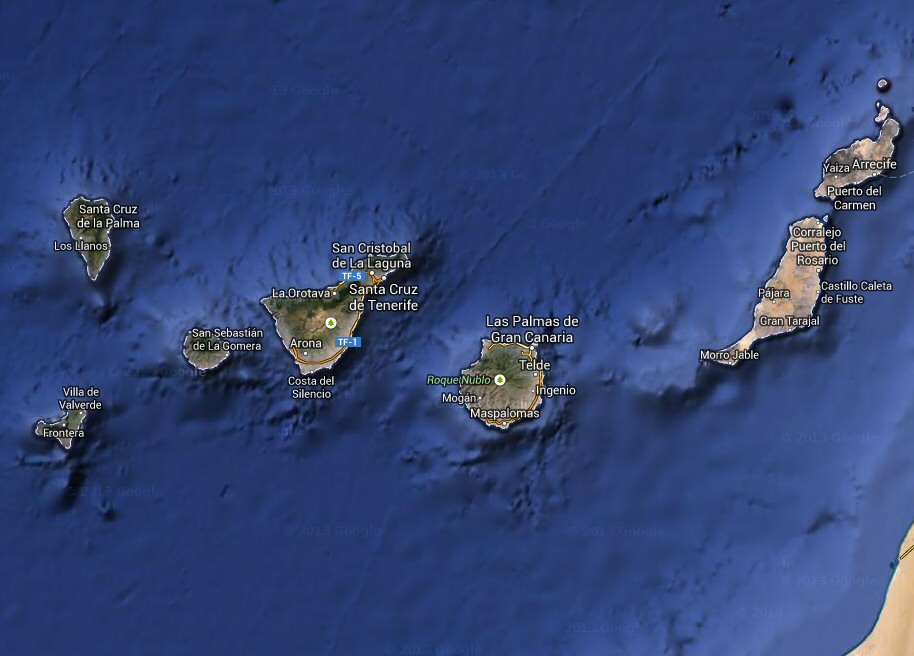
What if the Canary Islands…

Canary Islands

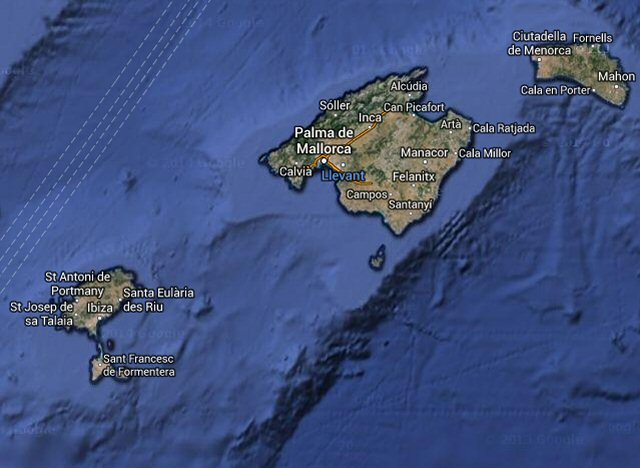
and the Balearic Islands

Balearic Islands

suddenly became world-class energy exporters? Would that diversify their economies, create jobs, and improve their standard of living? Would that be enough to merit an in-depth study?

Plan A: Argentina

Argentina

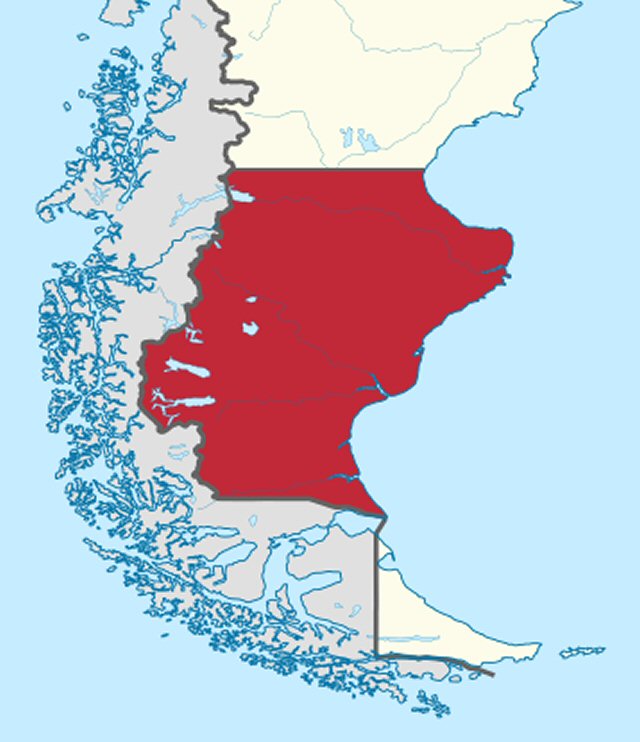
Santa Cruz is the country’s second-largest (94,187 square miles) and least densely populated (2.9 persons per square mile) province.

Santa Cruz Province

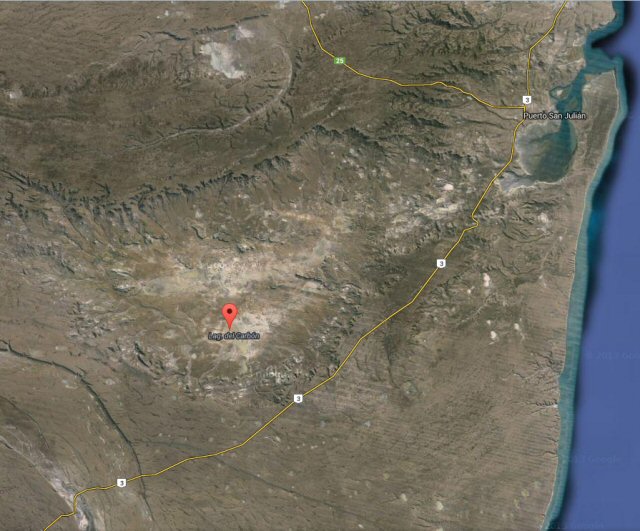
54 km (34 miles) SW of the port of San Julián lies the (2,900 sq km (1,119.7 sq mi) depression of the same name.

San Julian Depression, aerial view
San Julian Depression

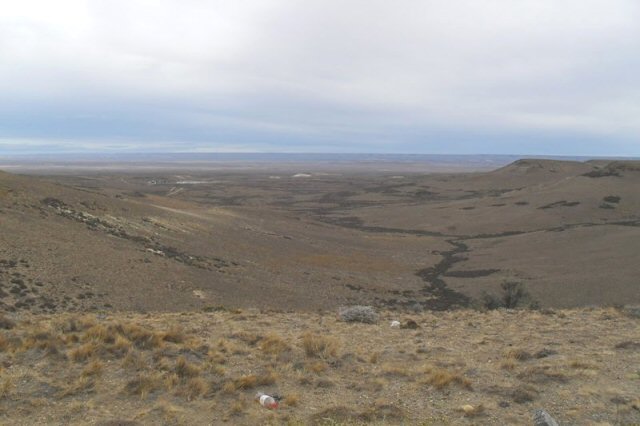
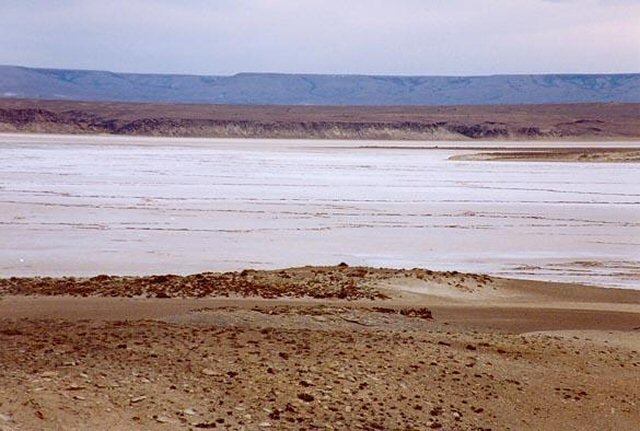
Within the depression lies the Laguna del Carbón, an endorheic salt lake 105 meters (344 ft) below sea level, the lowest point in the Western and Southern Hemispheres and the seventh lowest point on Earth.

Laguna Del Carbon
Laguna Del Carbon

Currently the depression has little or no use. Instead, it could be utilized to produce hydrogen by electrolysis of seawater. The first step would be to carve a sea-level canal from the coast to the depression. That would keep it full by gravity which would avoid pumping costs.

Seal level canal
Seal level canal
WordPress theme: Kippis 1.15