
Crops and Climate: Plants Will Suffer as Earth Warms (Op-Ed)
June 16, 2015
By Marlene Cimons, Climate Nexus
Marlene Cimons writes for Climate Nexus, a nonprofit that aims to tell the climate story in innovative ways that raise awareness of, dispel misinformation about and showcase solutions to climate change and energy issues in the United States. She contributed this article to Live Science’s Expert Voices: Op-Ed & Insights.
One persistent assumption about the effects of climate change is that plants will thrive in warmer temperatures and an atmosphere of increasing carbon dioxide. But the reality turns out to be not so simple. In many parts of the world, just the opposite could occur — and with potentially disastrous results for billions of people who depend heavily on plants for food, fuel and jobs.
New research in the peer-reviewed journal PLOS Biology suggests plants in the north will remain limited by solar radiation — which is scarce at northern latitudes due to the shape of the Earth and its rotation, and is not likely to change as a result of climate — curbing any positive effects of warming and additional carbon dioxide. Furthermore, many plants in tropical regions will be unable to tolerate excessively high heat, especially if accompanied by drought. The result could be a loss in valuable growing days for populations who can least afford it and are ill equipped to cope with it.
“Those who think climate change will benefit plants need to see the light, literally and figuratively,” said Camilo Mora, an ecologist and assistant professor in the geography department at the University of Hawaii at M?noa and the study’s lead author. “A narrow focus on the factors that influence plant growth has led to major underestimations of the potential impacts of climate change on plants, not only at higher latitudes but more severely in the tropics,” he said. These impacts will expose “the world to dire consequences.” [Animals and Plants Adapting to Climate Change]
Under these conditions, “choices become extremely limited for people who are already vulnerable,” said Micah Fisher, a Ph.D. candidate at the university and a co-author of the study. “Without options in livelihoods or food security, impacts tend to disproportionally impact the poor.”
The tropics could lose nearly one-third of their current plant-growing period if climate change continues unabated, which would have a significant impact on as many as 2.1 billion low-income people who rely on plants and their byproducts to survive, the study said.
The research shows that continued climate change will result in declines in plant-growing days by 2100, due to a combination of warming, drought and limited sun. Overall, the globe could see an estimated 11 percent reduction in the number of days with suitable conditions for plant growth, with some tropical regions facing the loss of up to 200 days per year by 2100.
“I think this is an important and novel insight, which highlights the synergistic consequences of a large and growing human population and its effect on the environment in which we live,” said David Inouye, professor emeritus of biology at the University of Maryland, who studies the impact of climate change on the environment, but who was not involved in the new study. “Some human populations are certain to be losers as a consequence.”
Global impact
The study provides a scale showing vulnerability for each of 194 countries. It maps the countries’ exposure through the decrease of suitable growing days, their dependency on agriculture-related products and livelihoods, and their adaptive capacity through basic economic indicators.
The study also found that changes in suitable plant-growing days were negligible under strong and moderate mitigation scenarios, suggesting that even modest reductions in emissions could prevent such drastic changes and their associated consequences for ecosystems and people. Also, the researchers said there may be other ways to lessen the impact.
“For plants that we grow for food, fiber and fuel, we have a little more control, and there are some additional options — for example, switching to growing crop varieties that can thrive under warmer, drier conditions, or irrigating to minimize the effects of drought, although irrigation is already used extensively,” said Iain Caldwell, a postdoctoral researcher at the university and another co-author of the study.
“Most of these options tend to be expensive, though,” Caldwell added. “Since our research also shows that some of the most extreme changes in plant-growing conditions will occur in some of the poorest countries in the world, these options may require help from other, wealthier countries.” Though these countries “may not necessarily be as heavily impacted, [they] are responsible for much of the emissions that have led to such climate change.”
More carbon emissions don’t mean more plants
Prior research that focused on temperature concluded that rising temperatures and carbon dioxide levels would be beneficial to agriculture. (A 1992 video financed by the coal industry, called “The Greening of Planet Earth,” and its 1998 successor, “The Greening of Planet Earth Continues,” made the same claim.) This became a talking point for those who failed to understand the huge uncertainties in the world’s understanding of how plants and ecosystems will respond to climate change in the coming decades.
Plants, in fact, depend on the availability of water, appropriate temperatures, light and nutrients, “and the impact of changes in any of these resources can depend on how sensitive a species/ecosystem is, how quickly a species can adapt or evolve, and even how different species interact,” said Ben Cook, a climate scientist at NASA Goddard Institute for Space Studies, who was not involved in the new research.
The assumptions that climate change was good for plants “probably originated in the idea that increased carbon dioxide, which plants use in photosynthesis, would stimulate productivity and plant growth, and that warmer temperatures would lead to longer growing seasons,” Cook added. “Very quickly, however, it became apparent that — while true on a certain level — these are really gross generalizations and the ultimate response of plants and ecosystems is really quite a bit more complex.”
The researchers who conducted the new study said it was not surprising that earlier studies looked at temperature, “since this is the most obvious indicator of a warming climate,” Fisher said. “It is also difficult to conduct global modeling of climate change. But we are getting better. The models have come a long way and have developed a much more accurate predictive power. We tried to fit the elements of plant growth into what we believed was an innovative approach.”
At locations where prior studies have been conducted, “plants are below their optimum temperature, and thus warming helps,” Mora said, meaning there is enough warmth for some growth, but they would grow faster if it became warmer at these locations. “If you add carbon dioxide, they do even better,” he said. “This would make sense to many, because as the planet gets warmer, those areas that are cooler, such as higher-latitude countries, will have better conditions for plant growth. Also, because we know that carbon dioxide is essentially food for plants, increases in carbon dioxide should result in more growth — if nothing else is limiting.”
However, “the problem is for the rest of the world, where plants are already living in conditions close to or past their optimum for growth, additional warming could take plant species beyond thresholds for growth and, possibly, survival,” Mora added.
Understanding the true complexity of climate
Overall, climate models are improving, “and we are continuing to develop better capabilities at understanding the nuances of climate change,” Fisher said. “It speaks to the challenges of developing policies to address very real impacts arriving from very complex systems. That’s part of the reason why people have missed the fact that these warming areas will not have the light to grow. It seems obvious, but we live in a complicated world, with a complex changing climate, and we have to find better forums to have these discussions.”
Using satellite-derived data, the PLOS Biology study — which also included Jamie Caldwell and Brandon Genco, both of the University of Hawaii at M?noa, and Steven W. Running, of the University of Montana school of forestry — identified the ranges of temperatures, soil moisture (water availability) and light (solar radiation) within which 95 percent of the world’s plant growth occurs today. The researchers then used climate projections to count the number of days in a year that will fall within the suitable climate ranges for plant growth in the future. The researchers counted the number of suitable plant growing days for all terrestrial areas of the globe, but did not include areas covered in water.
“This is a nice study that really considers the aggregate change in climate conditions that will be relevant for vegetation growth in the future, instead of just single factors like temperature or drought,” NASA’s Cook said. “And because it’s based on actual observations, it can potentially provide a useful benchmark for comparison of vegetation model simulations, which are more commonly used for these types of studies.”
The study did find that warming trends will increase by 7 percent the number of days above freezing temperatures that higher latitudes will experience. But these same locations will have limited light, a trend that studies examining temperature alone have missed.
“The reason solar radiation is an interesting factor here is because most areas that will surpass the lower temperature tolerance for plant growth — meaning an area will become warm enough to support plants in the future but do not support them today — will still be limited by solar radiation,” said Jamie Caldwell, referring to the effects of Earth’s shape and rotation at these elevations.
“Regions at higher latitudes will likely have less frost and snow on the ground in the future, but many plants will not be able to take advantage of those warmer temperatures, because there will not be enough sunlight to sustain their growth,” Iain Caldwell said.
While this is not the first study to dispel the idea that plants will benefit from climate change — other studies, for example, have shown such effects — the new paper takes a broader perspective, “examining what will happen to the majority of the world’s plant growth given factors that limit that growth,” Caldwell said.
Despite the potential for hardship under ongoing emissions rates, the study found that some northern regions — predominantly in China, Russia and Canada — likely will experience improved climatic conditions for plant growth.
“Our study provides important policy implications,” Mora said. “It suggests that we should make better friends with the Canadians. Not to make light of the situation, but imagine the political leverage that climate change could give to some countries if they gain the power to feed the rest of the world.”
The views expressed are those of the author and do not necessarily reflect the views of the publisher. This version of the article was originally published on Live Science.
NASA Climate Projection for 2100

A new NASA high-resolution climate forecast released to the public for the end of the 21st Century, capable of examining daily changes in individual cities and towns. Among its many benefits, it will help polities around the world prepare for catastrophic consequences such as floods and droughts.
Of particular interest is the temperature over the central Pacific, from Central America to the South China Sea. The warming of such a large amount of water could well speed climate change.
Click here to download the dataset.
Unaffordable Rents
[google-translator]
June 4, 2015
The National Low Income Housing Coalition has published a comprehensive report entitled Out of Reach 2015 describing in great detail how low wages and high rents affect people throughout the United States.
California, our most populous state and a historical trendsetter, has the 3rd highest rents in the nation. Currently the Fair Market Rent (FMR) for a two-bedroom APARTMENT (not a single family home, which is much higher) is $1,386. In order to afford this level of rent and utilities — without paying more than 30% of income on housing —a household must earn $4,619 monthly or $55,433 annually. Assuming a 40-hour work week, 52 weeks per year, this level of income translates into an hourly Housing Wage of $26.55. This in a state where the minimum wage is $9, the average renter’s wage is $18.96, and where fully 45% of the population rent. But that’s not all. The rent affordable at median income is $1,808.
Yes, unemployment has declined since the 2008 economic collapse. But many of the new jobs are so low-paying that too many people can support themselves only if they’re homeless. In the Los Angeles Area, for example, the trend is to share housing. Except for the well to do and above, it is now common to find three, four or more generations in one household. The higher density and lack of privacy has ramifications that negatively impact the quality of life of the occupants and cause great stress to public services. Water pipes, sewers, schools, freeways- all strain to keep up with the demand, with no relief in sight.
There are of course several reasons for this nightmarish situation. One is the abysmal, widening gap in the distribution of wealth and income, where a tiny minority owns most of the wealth and take the lion’s share of national income. Builders, who are in business to make money, tend to cater to high-end buyers, and that’s not the 45% of the population presently compelled to rent because they cannot afford to buy, even in gang-infested slums. Another is lack of vacant land to build on within the greater metro area, already absurdly spread out. Yet a third is lack of economic growth east and north of the city due to a number of factors, including demographic changes, topography and lack of water, currently exacerbated by the ongoing long term mega drought.
Thus, the higher rents are a function of lack of large-scale, low-cost new construction, particularly for young people saddled with long term college loans. Under the present circumstances, it’s no surprise to see a declining birth rate for those with college degrees, with all its related consequences.
Hope
[google-translator]
December 24, 2014

May this commemoration of the birth of Yeshua, Eashoa’, Iesous, Iesus, Isa, or Jesus, acknowledged round the world and considered by many synonymous with hope and justice, remind those who, while masquerading as anointed dispensers of free will, devote their lives, as if immortal, to the futile pursuit of the accumulation of wealth and its conjoined twin, the power to destroy.
As hatred continues to simmer unabated and flashes come forth from giant cauldrons of potentially species-ending wars, we should reflect on that glowing lesson from the annals of human history, now several thousand years old and amplified by the Internet: there has never been nonproliferation of weapons or wealth.
Let us all, then, be mindful that that most humble of elements –hydrogen, the maker of water- is destined to replace fossil fuels. The latter are at once the poison destroying our planet’s environment and biology and a principal accomplice in the accumulation of wealth and power, itself the cause of bone crushing poverty torturing and killing, in countless ways, the body and spirit of billions, at home and abroad.
Thankfully there is hope, but the choice is wholly within the purview and responsibility of our leaders. They and those who support them can either embrace an imperceptible, gradual transition to the fuel of the near future, and as President Kennedy bluntly put it, “abolish (nuclear weapons) before they abolish us” or continue to believe in victory where there is only death.
California Needs 42 Cubic Km of Water
December 16, 2014
RELEASE 14-333
NASA Analysis: 11 Trillion Gallons to Replenish California Drought Losses
It will take about 11 trillion gallons of water (42 cubic kilometers) — around 1.5 times the maximum volume of the largest U.S. reservoir — to recover from California’s continuing drought, according to a new analysis of NASA satellite data.

The finding was part of a sobering update on the state’s drought made possible by space and airborne measurements and presented by NASA scientists Dec. 16 at the American Geophysical Union meeting in San Francisco. Such data are giving scientists an unprecedented ability to identify key features of droughts, data that can be used to inform water management decisions.
A team of scientists led by Jay Famiglietti of NASA’s Jet Propulsion Laboratory in Pasadena, California used data from NASA’s Gravity Recovery and Climate Experiment (GRACE) satellites to develop the first-ever calculation of this kind — the volume of water required to end an episode of drought.
Earlier this year, at the peak of California’s current three-year drought, the team found that water storage in the state’s Sacramento and San Joaquin river basins was 11 trillion gallons below normal seasonal levels. Data collected since the launch of GRACE in 2002 shows this deficit has increased steadily.
“Spaceborne and airborne measurements of Earth’s changing shape, surface height and gravity field now allow us to measure and analyze key features of droughts better than ever before, including determining precisely when they begin and end and what their magnitude is at any moment in time,” Famiglietti said. “That’s an incredible advance and something that would be impossible using only ground-based observations.”
GRACE data reveal that, since 2011, the Sacramento and San Joaquin river basins decreased in volume by four trillion gallons of water each year (15 cubic kilometers). That’s more water than California’s 38 million residents use each year for domestic and municipal purposes. About two-thirds of the loss is due to depletion of groundwater beneath California’s Central Valley.
In related results, early 2014 data from NASA’s Airborne Snow Observatory indicate that snowpack in California’s Sierra Nevada range was only half of previous estimates.
The observatory is providing the first-ever high-resolution observations of snow water volume in the Tuolumne River, Merced, Kings and Lakes basins of the Sierra Nevada and Uncompahgre watershed in the Upper Colorado River Basin.
To develop these calculations, the observatory measures how much water is in the snowpack and how much sunlight the snow absorbs, which influences how fast the snow melts. These data enable accurate estimates of how much water will flow out of a basin when the snow melts, which helps guide decision about reservoir filling and water allocation.
“The 2014 snowpack was one of the three lowest on record and the worst since 1977, when California’s population was half what it is now,” said Airborne Snow Observatory principal investigator Tom Painter of JPL. “Besides resulting in less snow water, the dramatic reduction in snow extent contributes to warming our climate by allowing the ground to absorb more sunlight. This reduces soil moisture, which makes it harder to get water from the snow into reservoirs once it does start snowing again.”
New drought maps show groundwater levels across the U.S. Southwest are in the lowest two to 10 percent since 1949. The maps, developed at NASA’s Goddard Space Flight Center in Greenbelt, Maryland, combine GRACE data with other satellite observations.
“Integrating GRACE data with other satellite measurements provides a more holistic view of the impact of drought on water availability, including on groundwater resources, which are typically ignored in standard drought indices,” said Matt Rodell, chief of the Hydrological Sciences Laboratory at Goddard.
The scientists cautioned that while the recent California storms have been helpful in replenishing water resources, they aren’t nearly enough to end the multi-year drought.
“It takes years to get into a drought of this severity, and it will likely take many more big storms, and years, to crawl out of it,” said Famiglietti.
NASA monitors Earth’s vital signs from land, air and space with a fleet of satellites and ambitious airborne and ground-based observation campaigns. The agency develops new ways to observe and study Earth’s interconnected natural systems with long-term data records and computer analysis tools to better see how our planet is changing. The agency shares this unique knowledge with the global community and works with institutions in the United States and around the world that contribute to understanding and protecting our home planet.
Climate Change, Differentiation and Money
December 14, 2014
The United Nations climate change conference in Lima ended with a less than comprehensive accord.

There’s an anecdote from the age before radar that illustrates where the world stands today with respect to climate change:
A brand new dreadnought-class battleship is steaming at 15 knots in thick fog. The lookout spots a barely visible light straight ahead, at an indeterminate distance, and reports it to the captain. Based on the growing intensity of the light, the captain assumes a fast-approaching small vessel, as of yet invisible to the lookout, is unaware of the impending collision. Hastily he blows the horn and sends a wireless ordering it to move. A swift response comes in, short and blunt, “You move.” Incensed, the captain responds, “No, you move. I’m a dreadnought; it takes us much longer to turn and there’s no time. If you don’t we’ll crush you.” To which the light replies, “No, you move. I’m a lighthouse on dry land and you only have a few minutes before you hit the jagged rocks and boulders around me.”
It’s no secret that a handful of nations own, or control by proxy, most of the fossil fuel reserves in the world. Collectively they also produce and consume the lion’s share of the fuels, therefore their wealth and power are linked to them. That of course poses a dilemma as it conflicts with the urgent need to fight climate change. For that reason their goal seems to be a finely tweaked reduction, but not outright elimination, of fossil fuels as a principal component of the world’s energy supply. For example, if they were to assist poor nations that lack domestic sources of hydrocarbons (captive clients) make the transition to solar to generate all their electricity, three things would likely decline: the demand for fossil fuels, their price, and the need for dollars to pay for them. Conversely, poor nations would benefit greatly. They would pay nothing for fuel to generate electricity and they would save their hard-earned dollars for other priorities. This would amount to nothing less than a tectonic shift in the world order.
While better than nothing, it’s simply not enough to limit the average atmospheric temperature increase to an “acceptable” level. Already we’re experiencing catastrophic storms and devastating droughts; many if not most of the world’s great aquifers are being depleted at an alarming rate and entire rivers no longer reach the sea. Worse, there’s no global forum, not even a discussion to create one, to address a crisis that may well ignite wars and famine in the not too distant future.
Collectively, individually or in groups, countries should very seriously consider the possibility of creating an alternate binding mechanism within the context of reducing greenhouse gas emissions to:
- use solar energy to eventually generate all our electricity;
- use excess electricity to produce hydrogen by electrolysis of seawater;
- use the hydrogen expressly to manufacture pure water wherever it’s needed or desired, domestically or for export;
- generate additional electricity using hydrogen and gravity as described in Plan A above.
The technology exists, and it should improve. As for money, there’s plenty of idle private capital worldwide which could be tapped under the right terms and conditions.
Several variants of Plan A, designed for a variety of regions, are available. The question is, will the dreadnought change its course?
Compromise at the Convention on Climate Change, Lima 2014
December 7, 2014
As at previous similar conventions, there is agreement on the overall goal, not on who should do what, when, and pay how much. Rather than repeating the entire list of disagreements, the following might become the basis for a possible compromise.
The overall goal is to reduce global greenhouse emissions. The current mindset is that each country is responsible for curbing a percentage of its emissions, and that rich nations must help poor nations with $100 billion annually by 2020. So far pledges to the Green Climate Fund amount to $10 billion, understandable since no one likes or wants to pay.
There’s nothing to prohibit one country from investing in another to reduce the 2nd country’s emissions. For example, China, the world’s largest emitter, could finance (as a loan, possibly even in Chinese currency) the installation of solar panels on each and every building in Lima, the host city. Gradually, following a well-designed plan, conventional power plants serving Lima would be taken offline. That would reduce Peru’s emissions. Simultaneously, also with Chinese funding, a plant to produce hydrogen by electrolysis of seawater (and chlorine, a byproduct) would be built. Emulating the successful Hawaiian model, excess electricity generated by Lima’s new solar panels would be used to power the plant.
Benefits for China
China would have the right to buy the hydrogen at a discounted price for a specified period of time, enough to amortize the loan. At the end of the period the price would revert to market price. Back home, China would use the hydrogen to generate electricity and produce pure water (a priceless byproduct) whether at planned or existing coal-fired power plants. Thus, China would get credit for reducing emissions in both countries, 100% in China and 50% in Lima, which would help it meet its greenhouse gases reduction goal/pledge. The additional electricity and water would help China maintain or expand its economic growth, a boon for the global economy.
Benefits for Peru
It would become an important exporter of hydrogen and chlorine, and since hydrogen is renewable its reserves would never run dry. It could invest the income from the sale of hydrogen to build yet more plants for domestic use. The new water would eventually compensate for the shrinking Andean glaciers, and it would save all those dollars currently being spent to buy fossil fuels for conventional plants.
Of course, the system can accommodate similar arrangements between other rich and poor nations.
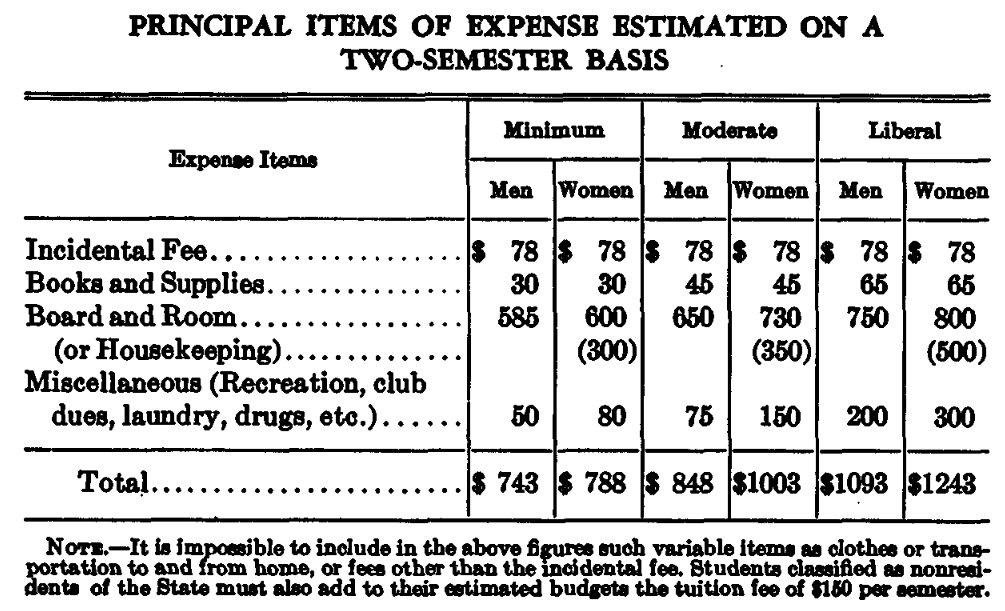
UCLA Fees 1949-1950
Source: Registrar Archive, University of California at Los Angeles
Inflation conversion factor 1950-2014 = 9.8520; 2014 dollars in parentheses.
Incidental fee: $39 ($384.23)
Covers certain expenses of students for library books, athletic and gymnasium facilities and equipment, lockers and washrooms, registration and graduation, consultation, medical advice, dispensary treatment as can furnished on the campus by the Student Health Services, and for all laboratory and course fees. It also includes the rights and privileges of membership in the Associated Students, valued at $4 ($39.41). No part of this fee is remitted to those students who may not desire to make use of any or all of these privileges. If a student withdraws from the University within the first five weeks from the date of his registration, a part of this fee will be refunded. The incidental fee for graduate students is $35 ($344.82) each semester; it does not include membership in the Associated Students. Students who are classified as nonresidents of the State are required to pay, each semester, in addition to the incidental fee, a tuition fee of $150 ($1,477.80).
Tuition. The University charges a tuition fee to every student who has not been a legal resident of the state of California for a period of one year immediately preceding the opening day of the semester during which he proposes to enroll. Tuition in the academic colleges is free to students who have been residents of the state of California for a period of one year immediately preceding the opening of the semester during which they propose to attend the University. Students who are classified as nonresidents are required to pay a tuition fee of $150 ($1,477.80) each semester. This fee is in addition to the incidental fee.
Other Fees
Application fee, $5 ($49.26). This is charged every applicant for admission to the University, and is payable at the time the first application is filed. Applicants for graduate status must pay this fee, even though it may have been paid once in undergraduate status.
Medical examination: Original appointment, or deferment arranged in advance, no fee. Fee for a second appointment, $2 ($19.70).
Late filing of registration book, $2 ($19.70).
Late examination in Subject A, $1 ($9.85).
For courses added or dropped after date set for fling registration book, $1 (9.85) for each petition.
For reinstatement of lapsed status, $5 ($49.26).
For late application for teaching assignment, $1 ($9.85).
For late notice of candidacy for the bachelor’s degree, $2 ($19.70.
For late return of athletic supplies, $1 ($9.85) for each 24 hours until full purchase price of article is reached.
For failure to empty locker within specified time, $2 ($19.70).
Returned check collection, $1 ($9.85).
Deposit required of applicants for teaching positions who register with the Office of Teacher Placement, a deposit of $5 (49.26) to cover the clerical cost of correspondence and copying of credentials.
Refunds
Refund of a part of the incidental fee is made to a student who withdraws from the University within five weeks from the date of his registration.
Refund on the nonresident fee is made in accordance with a schedule on file in the offices of the Registrar and Cashier; dates are computed from the first day of instruction of the semester.
No claim for refund of fees will be considered unless such claim is presented during the fiscal year to which the claim is applicable. No student will be entitled to a refund except upon surrender to the Cashier of his registration certificate and receipt. Students should preserve their receipts.
The Caribbean
[google-translator]
G-20 Infrastructure Commitment
On November 16, 2014 leaders of G-20 nations in Brisbane, Australia presented a plan to boost global GDP by more than $2 trillion over five years by investing in infrastructure and increasing trade. Presumably the infrastructure they have in mind will include projects to reduce the use of fossil fuel, chronic poverty, and the abysmal gap in the distribution of wealth and income. If so, here are additional countries with abundant sunshine and water, prime candidates for the mass production of hydrogen by electrolysis.

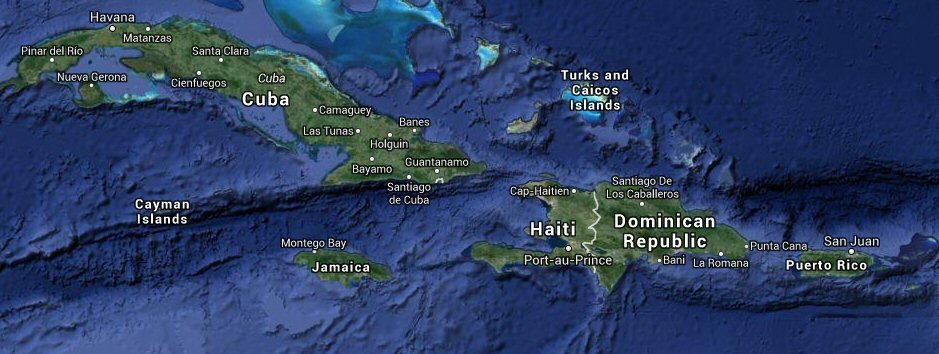 They, like so many others throughout the world, have little or no fossil fuel reserves. As a result, they are compelled to import most if not all the fuel to generate electricity, payable (so far) in U.S. dollars. If they switch to solar along the lines of the successful Hawaiian prototype, they’ll become energy exporters and save all that precious hard currency. Further, if the countries distribute the net profit to homeowners -as they should since the latter would generate the electricity to produce the hydrogen- this new and permanent income stream would stimulate construction, create jobs and reduce their poverty rate.