Consequences of Climate Change Assessment by the U.S. Department of Agriculture

Excerpted from the full report

August 2012

Executive Summary

The 2010 Resources Planning Act (RPA) Assessment is the fifth report prepared in response to the mandate in the 1974 Forest and Rangeland Renewable Resources Planning Act (Public Law 93โ€“378, 88 Stat 475, as amended). This report summarizes findings about the status, trends, and projected future of forests, rangelands, wildlife and fish, biodiversity, water, outdoor recreation, wilderness, and urban forests, and the effects of climate change upon these resources. The results will be useful to resource managers and policymakers as they develop strategies to sustain natural resources. The Forest Service, an agency of the U.S. Department of Agriculture, will continue to use the results to inform strategic planning and forest planning.

The 2010 RPA Assessment outlook for U.S. resources is largely influenced by a set of RPA scenarios with varying assumptions about global population and economic growth, global wood energy consumption, U.S. population and economic growth, U.S. land use change, and global climate change from 2010 to 2060.

Key Themes
Land development will continue to threaten the integrity of natural ecosystems.

Urban and developed land area is projected to increase across RPA scenarios between 41 and 77 percent by 2060. Although urban and developed land area remains a relatively small percentage of the U.S. land base, this expansion occurs at the expense of forest and rangelands. Forest land area is affected the most: forest losses are projected to range from 16 to 34 million acres in the conterminous United States. The South Region is expected to have the greatest loss of forest, ranging from 9 to 21 million acres, roughly 4 to 8 percent of the Southโ€™s 2007 forest land base.

The loss of forest land contributes to reduced growth in total forest inventory, reduced forest carbon stocks, and reduced tree canopy cover. Forest inventory volumes are expected to peak between 2020 and 2030, followed by a decline in volume to 2060. Only in one RPA scenario is inventory volume in 2060 less than in 2010, however. Carbon stocks are also projected to decrease across all RPA scenarios as a result of declining forest land area and changes in carbon stored per acre. The result is that forest land becomes an emissions source in future decades, the tipping point varying by the particular dynamics of land use change and timber harvest levels in each RPA scenario.

Although the loss of acres is important, low-density development may pose a greater threat to the integrity of remaining forest and rangelands through the effects of fragmentation. The expansion of housing in the wildland-urban interface and housing development around public lands fragment natural land covers and often lead to additional development. Habitat loss and degradation are major causes of species endangerment. At-risk species tend to be prominent in areas with high human-population densities, where land use intensification has occurred, or where species with restricted ranges are concentrated. Given the projected land use changes, biodiversity in the United States is expected to continue to erode.

Climate change will alter natural ecosystems and affect their ability to provide goods and services.

Changes in temperature and precipitation generally had limited effects on the distribution of forest types and forest inventory during the RPA projection period, but those effects were more noticeable in the Western United States. At least in the immediate future, climate change is not posing a risk to having sufficient inventory to sustain forest products production. The risk to providing other forest ecosystem services is not known, however, nor is the potential effect of increasing occurrences of extreme events.

Rangeland ecosystems typically occur in areas of environmental limitations. The diversity of rangeland ecosystems, the multitude of current stressors, and the potential changes in climate will result in highly diverse responses to climate change across rangeland systems. Effects on forage availability, with consequences to ranch enterprises of livestock, game, or tourism will require flexible, and possibly novel, management to maintain rangeland health and economic viability.

Climate change is projected to have substantial effects on water demand and supply. The primary effects of climate change on water demand are increases in agricultural irrigation and landscape watering in response to rising plant water needs. Across a range of RPA scenario-climate combinations, water withdrawal would increase from 2 to 42 percent from 2005 to 2060. The result of the combination of increasing water demand and declining water yields is an increase in vulnerability of the U.S. water supply to shortage, especially in the larger Southwest and Great Plains.

Change in terrestrial wildlife habitats will affect both the current habitat of wildlife species and their ability to migrate if habitats change. The grassland-forest land transition throughout the Central United States and the steep elevation gradients in the Intermountain West will be most exposed to habitat stress caused by a shifting climate regime. A comparison of areas of future stress to areas of current stress associated with the distribution of at-risk species and intense land uses indicated that the location of high current stressors tends not to overlap well with the location of high future stress associated with climate change. This lack of overlap potentially complicates the efforts of managers to prioritize wildlife conservation actions.

Climate variables only slightly affected outdoor recreation participation, with results indicating slight increases or decreases in participation rates and days of participation that varied across outdoor recreation activities. The exceptions were snowmobiling and undeveloped skiing (cross-countryskiing and snowshoeing), for which climate effects resulted in substantial declines. The effects of climate change on the recreation environment are also expected to affect future outdoor recreation opportunities.

Competition for goods and services from natural ecosystems will increase.

Increasing water demands are likely to increase competition between water uses. The water projections indicate that the United States is on a pathway to unsustainable levels of water use in several regions across a range of RPA scenarios. Increased water use efficiencies, water demand reductions, increased trading or sale of water rights, and higher pricing for water consumed are possible mechanisms that could help to bring water supplies into balance with future water demands. Future water use levels depend most importantly on uses in the agriculture sector because irrigation requirements are highly sensitive to changing precipitation and temperature patterns. The current outlook indicates that demand pressures will increase, continuing or increasing current groundwater mining and further depleting streamflows, especially in drier areas of the United States. These pressures, in combination with development effects on water quality, raise concerns about the health and relative abundance of aquatic species in the future.

Species associated with aquatic habitats have higher proportions of at-risk species than other species groups. The condition of aquatic systems varies across the United States. Nationwide, more than one-half of monitored lakes were ranked in good condition, but only 28 percent of wadeable streams were ranked in good condition. Imperiled aquatic species tend to occur in areas with high population density, and many of those areas are projected to have increased population and development in the future. Maintaining or improving water quality and streamflows is likely to be challenging, especially in the face of increasing development pressure and water demands.

The availability of suitable land may constrain growing recreation demand. A stable public land base, a declining private natural land base, and increasing numbers of outdoor recreation participants are expected to result in increased conflicts among recreationists and declines in the quality and number of per-person recreation opportunities. The ability of recreation resources to absorb additional demand varies widely across the United States. The limited amount of public land in the East, where most forest land is privately owned, will likely be under greater stress from additional demand than public lands in the West.

Pressures are likely to be greatest on public lands near large and growing population centers.

In contrast to the water and outdoor recreation situations, future demands for livestock forage and forest products can be met out to 2060 for most RPA scenarios, despite the projected losses in land area devoted to these uses. Currently, forage availability exceeds forage demand on 98 percent of all rangeland, and little increased grazing pressure on rangeland is expected in the near future. Given the current general abundance of forage, effects of climate change on ranch enterprises are likely to be localized.

Timber resources are projected to be abundant enough to meet demands, especially if we continue to see efficiency gains in harvesting and conversion technology. Only the RPA scenario with the highest increase in wood biomass use for energy is expected to lead to potential competition for land resources with other uses, particularly with agriculture. The high harvest levels to meet these demands may create conflict with other for forest uses. For example, the projected expansion of planted pine in the South Region to meet those biomass energy demands would displace natural pine, which may be undesirable from a biodiversity perspective.

Geographic variation in resource responses to drivers of change will require regional and local strategies to address resource management issues.

Projected population growth ratesโ€”and associated urban and suburban development patternsโ€”vary across the United States. Areas with high population growth rates will see large expansions of urban areas, unless local and regional master plans are in place to manage the growth effects. Trees in urban areasโ€”the urban forestโ€”deliver a variety of ecosystem services. Retaining and managing trees in newly developed urban areas will be increasingly important in the future to continue receiving ecosystem services that are critical to urban quality of life. Low-density development patterns are more difficult to predict but are more likely to occur in rural areas where population continues to grow than in areas where population declines are projected.

Development will also affect rangelands, even though the proportional loss of rangelands is smaller than for forest land area. Rangeland areas with the highest levels of fragmentation occur where agricultural land uses are prevalent. Many of these areas have projected declines in population, which should stem development pressure. Expansion of farming could result in the conversion of some rangelands to crops in places suitable for increased agricultural production, particularly if crop prices remain high. Conversely, several areasโ€”particularly in the Southwestโ€”that currently have relatively little fragmentation will likely be exposed to development pressure from population growth.

The projected changes in vulnerability of the U.S. water supply vary geographically. Decreases in water yield (that in turn affects water supply) have a greater effect on future vulnerability than the effect of increases in water demand in about half of the assessment subregions (ASRs) where vulnerability is projected to increase. In some ASRs, the combined effect of changes in water yield and demand lead to untenable levels of vulnerability, suggesting that adaptation to water shortage there will be essential. Currently, the West has more areas of higher vulnerability. Future increases in vulnerability may also affect some parts of the East, along with becoming more prevalent in the West.

Imperiled aquatic species are concentrated in the Eastern and Southwestern United States. Where increased risks of water shortages are projected, threats to aquatic species are likely to increase. Conflicts about water uses, maintenance of instream flows, eroding water quality, and prices for water and water rights are all likely to increase in the future, exacerbating the threats to these species. Water policymakers and water rights owners are likely to face more tensions among water uses and pressures to change or adapt existing policies to better reflect shifting water use values.

Looking Forward

The United States has abundant natural resources. A growing population is projected to lead both to increased demands for a wide array of goods and ecosystem services from forests and rangelands and to shifts in land uses as public values for certain goods and services change. Woody biomass production to promote domestic energy security is a prime example.

The outlook shown in this report is based on a continuation of current natural resource management policies in the face of projected changes in demographic and economic conditions and social values. The results highlight a number of areas in which pressures may emerge on policymakers to change current policies or develop new policy approaches. The negative effects on the environment, economy, and society portrayed by the scenarios in this RPA Assessment are not foregone conclusions. They can be avoided by timely actions from policymakers and land managers. This RPA Assessment lays the scientific foundation for taking action and dealing with the issues before their full effect is felt.

Remarks Of Secretary Jacob J. Lew On The Economics Of Climate Change

Editor’s note: does not offer a solution to drought.

Excerpt of the full transcript

โ€ฆThe need for action is clear.  The world can either choose to ignore the challenge today and be forced to take more drastic action at greater cost down the road.  Or we can make sensible, modest and gradual changes now, and in the process create jobs, reduce business and household expenses, and drive innovation, technology, and new industries.  This choice should also be clear.

As an economic matter, the cost of inaction or delay is far greater than the cost of action. Costs associated with extreme weather events like rising sea levels, drought, heat waves, wildfires, floods, and severe storms demonstrate the scope of economic exposure.  The Council of Economic Advisers estimates if warming above pre-industrial levels increases to three degrees Celsius, instead of two degrees Celsius, there could be a 1 percent decrease in global output annually.  The economic cost of climate change is not limited to one sector of our economy.  It threatens our agricultural productivity, our transportation infrastructure and power grids, and drives up the incidence of costly healthcare problems.

We are facing historic levels of extreme weather from a range of conditions.  Some parts of the country face extreme flooding, and other areas face severe droughts.  Our agricultural regions are threatened with some states facing a potential loss of up to 50 to 70 percent of average annual crop yields, and livestock productivity is threatened as well.

Nowhere is the economic cost of climate change more clear than in the area of infrastructure, which is fundamental to our economy’s productivity and competitiveness.  The fact is, our water and sewer systems, our power plants and power grids, and our roads and airports were not designed or built for the extreme climate conditions that we are facing now and expect to face in coming decades.  Superstorm Sandy in 2012 closed every tunnel and most bridges leading into New York City, while a large part of the subway system below 34th Streetโ€”including all seven tunnels under the East Riverโ€”was flooded by storm surges.

Increased health care costs associated with pollution and extreme heat are well documented.  Very high temperatures, for example, threaten the health and safety of construction workers, farmers, and others who work outdoors, while putting entire industries like housing and agriculture at risk.  Extreme heat will also lead to more heat related illness.  Dangerous air pollution creates the risk of similar negative consequences for the health and safety of Americans across the country.

On the other hand, much less has been said about the impact of climate change on our nation’s fiscal situation.  When the federal government has to step in and do things like provide disaster relief, crop and flood insurance, protection from wildfires, and healthcare, taxpayers pay the cost.  Already, the National Flood Insurance Program has had to borrow $24 billion from the Treasury Department because of payouts resulting from Hurricanes Katrina, Rita, Wilma, and Sandyโ€”all of which occurred over the past nine years.  If the fiscal burden from climate change continues to rise, it will create budgetary pressures that will force hard tradeoffs, larger deficits or higher taxes.  These tradeoffs would make it more challenging to invest in growth, meet the needs of an aging population, and provide for our national defense.

As former Secretary Rubin has said, “[W]hatever your public policy views, whether you care about our national debt and deficits, our tax rates, or government investing in everything from national security to job creation, you should care about the costs of coping with climate-related damage.”  In short, we must do all we can to limit this burden and to manage the fiscal risk.

President Obama understands what is at stake, and after years of talk in Washington about facing up to the challenge of a changing climate, he has taken action by reducing carbon pollution, increasing energy efficiency, and investing in American energy, including natural gas, solar, and wind power.

I know that some view combating climate change as a choice between investing in our future and growing our economy in the near term, but that is a false choice.  Making the right investments will make our economy stronger today, create tens of thousands of new jobs, and position the United States to lead the world in the technologies and the industries of the future.

We have already seen this work.  Our new fuel economy standards will double the distance our cars will go on a gallon of gas by the middle of the next decade, and we have doubled the amount of renewable energy we produce.  This means that our cars, trucks and renewable technology will compete effectively in a world looking for energy efficiency, lower costs, and lower emissions.

The fact of the matter is, over the past few years, solar installations have increased by 500 percent, and now every four minutes, a home or business goes solar in the United States.  At the same time, with the President’s Better Buildings Initiative, the energy efficiency of America’s commercial buildings is improving.  Making buildings more energy efficient creates jobs, lowers business costs, and reduces pollution.  So far, this initiative has led to $300 million in energy savings for businesses and other organizations.

To be sure, changing how we power our country is good economic policy. Today, the fastest-growing source of electric generation is renewables, which already account for a fifth of generation globally.  Indeed, renewables now produce as much electricity worldwide as gas and more than twice that from nuclear.  In the coming years, an expanding world will demand more and more electricity and renewables are expected to be the fastest-growing source to meet that increased demand.  So the more we do at home to encourage low-carbon energy generation, the better positioned our companies and workers will be to take advantage of these new business opportunities.

To build on what we have accomplished, as part of the administration’s Climate Action Plan, the President announced new rules this summer for existing power plants.  These rules represent the most significant policy to arrest climate change that the United States has taken to date.  And they will help us cut carbon pollution and increase clean energy production.

Though much remains to be done, these policies represent our nation’s commitment to meeting the challenge of climate change head on.  And tomorrow, the President will join more than 120 heads of state in New York to mobilize global action to address climate change, because this is a global problem that requires collective action.

Global action is imperative, and it is a good investment in global economic growth.

First, making these changes is cost-effective.  Look at the new power plant rules that I just mentioned.  This policy will reduce greenhouse gas emissions from power generation by 30 percent relative to 2005 levels.  And meeting these standards will cost a fraction of the benefits associated with the increased efficiency at coal power plants and the greater use of renewables and natural gas.  The health and climate benefits from producing more clean energy and reducing our use of dirty energy is expected to be worth between $55 and $93 billion in 2030.

Second, if we fail to make changes now, it will be much more costly to deal with the problem later, and some options may be foreclosed entirely. The right approach going forward is to use market forces that balance the cost of reducing emissions with what the latest science tells us we need to do to keep temperature increases below dangerous levels.  The alternativeโ€”allowing greenhouse gas emissions to reach increasingly dangerous levelsโ€”will require expensive and more difficult action later.  In a recently released report, the Council of Economic Advisers found that, for each decade of delay, the cost of hitting a given climate target goes up, on average, by approximately 40 percent.

We must adopt a risk-management approach to climate change.  We must do what we can to substantially lower the risk of the most catastrophic climate impacts, and that means reducing emissions.  As former Secretary of the Treasury Hank Paulson, wrote recently, “There is a time for weighing evidence and there is a time for acting.  And if there’s one thing I’ve learnedโ€ฆit is to act before problems become too big to manage.” The fact that Secretary Rubin and Secretary Paulson have taken leadership positions in making the case to address climate change underscores the economic urgency of actionโ€ฆ

Another Perspective to Secretary John Kerryโ€™s Comments on Climate Change

October 12, 2014

Secretary Kerry is of course correct in his understanding that climate change must be quickly addressed. However, his prescription โ€“clean energy- the equivalent of a vaccine, is not a remedy for the full blown disease our planet is suffering from. No doubt it might have helped 45 or more years ago, before those gazillions of tons of greenhouse gases were nonchalantly dumped into the atmosphere, before killer droughts became commonplace, thousands of species extinct, the ocean acidic, and most certainly before the unacceptable gap in the distribution of income and wealth decimated the American working and middle classes. Now much, much more is required.

Clean energy and solar power are not synonymous; the latter is a subset of the former. More to the point, if the clean energy market is the mother of all markets, then the water market is the father, and the sun is the matchmaker. Hereโ€™s why.

Except for desalination in coastal areas, which consumes enormous amounts of energy, all the clean energy in the world including wind, solar, and even nuclear fission, which in fact is anything but clean, will not produce a meaningful amount of fresh water. A clean energy policy by itself does nothing to solve mega droughts anywhere or replenish aquifers in California, Nevada, Arizona or the Great Plains, the nationโ€™s breadbasket. In a nutshell, we are in grave danger of eventually suffering unprecedented losses, not just financially but strategically in terms of our ability to grow our own food. What we do now, or fail to do, will determine the outcome.

Even if a clean energy policy manages to generate and produce enough electricity and water to meet current and future demand, that still does not address the gap in the distribution of income and wealth. Modern technology has made the nineteenth century model of public utilities and electric grids obsolete, and itโ€™s time to recognize and admit that fact.

Stacked solar glass orbs

Stacked solar glass orbs

Any building, even in areas prone to overcast skies could theoretically generate a surplus of electricity. Therefore, over time, large power plants can and should be phased out as described in Plan A to divert profits from utility shareholders to working and middle class borrowers.


First-time buyers

First-time buyers (click to enlarge)


That would help the latter qualify for mortgages, promote large scale construction to relieve the housing shortage thatโ€™s keeping prices artificially inflated to the injury of young first-time buyers, create much needed man-jobs and improve the buying power of consumers.


While useful to the domestic economy, clean energy is not an exportable commodity; more specifically, it cannot be directly exported to reduce or perhaps reverse the trade deficit with China. Hydrogen is exportable; when combined with the oxygen in the atmosphere it will produce fresh water anywhere, even in remote deserts far from shore. Hopefully the upcoming meeting in Lima, in the shadow of the majestic Andes, will inspire world leaders to consider the merits of the Andean module of Plan A.

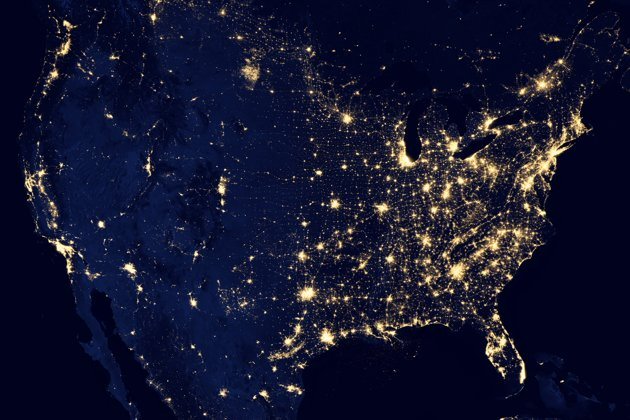
Developed east; undeveloped west

Underdeveloped west, developed east

Any new energy policy should not be east-centric; the western half should be fully developed on par with the east, particularly non-coastal areas as described in Plan A. Only so might it become possible to conquer drought, reverse the trade and federal deficits, and create a new income stream to help reduce the wealth gap.

Secretary John Kerry on Climate Change

October 9, 2014

(Excerpt of his complete remarks)
โ€ฆthe gathering storm that Sir Winston also warned about. And there is no element of that gathering storm more critical than climate change.

Together, both of our countries recognize that never before has a threat like climate change found in its solution such a level of opportunity โ€“ the opportunity to unleash the clean-energy economy that will get us out of this mess but also take us forward towards a safer, more sustainable future.

Now I know that climate change to some people can just seem like a very distant, future prospect, maybe even a future challenge. Thatโ€™s dangerous, falling prey to that perception, because itโ€™s not. And it would be very dangerous to lull ourselves into believing that you can wait with respect to any of the things that we need to do to meet this challenge.

Climate change is already impacting the world in very real and significant ways. This past August was the hottest August the planet has ever seen in recorded history. And each year of the last ten years, a decade, has been measured as being hotter than the last with one or two variations of which year followed which, but as a decade the hottest in our recorded history.

There are now โ€“ right now โ€“ serious food shortages taking place in places like Central America because regions are battling the worst droughts in decades, not 100-year events in terms of floods, in terms of fires, in terms of droughts โ€“ 500-year events, something unheard of in our measurement of weather.

Scientists now predict that with glaciers and melting of the ice at the current rates, the sea could rise now a full meter in this century. A meter might not seem like a whole lot, but let me tell you, think about it just in terms of Boston. It would mean about $100 billion worth of damage to buildings, to emergency costs, and so on.

And thinking about climate change as some distant challenge is dangerous for other reasons too. We still have in our hands a window of opportunity to be able to make the difference. We donโ€™t have to face a future in which weโ€™re unable to talk about anything except adaptation or mitigation, already present in our planning. But the window is closing quickly. Thatโ€™s not a threat; thatโ€™s a fact. If all of us around the world do not move to push back against the current trend line of what is happening in climate change, we will literally lose any chance of staving off this threat.

The good news is that we actually know exactly how to do it. This is not a challenge which has no solution. This is not a challenge thatโ€™s out of our reach. The solution is staring us in the face. Itโ€™s very simple: clean energy. The solution to climate change is energy policy. And the best news of all is that investing in clean-energy economy doesnโ€™t just mitigate the impacts of climate change and make our communities cleaner and healthier. It actually also reinvigorates our economies and creates millions of good jobs around the world.

Let me just share with you something. We in Massachusetts ought to be particularly tuned into this. In the 1990s, America created more wealth than at any other time in our history, more even than the famous 1920s and โ€™30s, when people read about the history of the Carnegies and the Mellons and the Rockefellers and the Fricks and so forth. We created greater wealth in the 1990s in America than we did when we had no income tax in the 1920s.

And the truth is that that came about as a $1 trillion market with 1 billion users โ€“ remember the one for one โ€“ in technology, in personal computers, in communications. And guess what? Every single quintile of income earner in America saw their incomes go up. Everybody did better. Well, the energy market that we are looking at today, in a nation that doesnโ€™t even have a national grid, a nation that has an east coast grid, a west coast grid, a Texas grid, and a line that goes from Chicago out into the west towards Dakotas โ€“ thatโ€™s it. We have a huge, gaping hole in the middle of America. We canโ€™t take energy from solar thermal in the Four Corners down there by New Mexico and Colorado and California and bring it to the northeast where we need it. We canโ€™t take energy from those wind farms of Minnesota or Wisconsin or Iowa and sell it south, or our wind ultimately from Cape Wind because we donโ€™t have a transmission system.

Guess what? $1 billion of investment in infrastructure is somewhere between 27,000 and 35,000 jobs. And if we were to do what we know we need to do to build the energy future of this country, weโ€™ll put millions of people to work, and hereโ€™s the kicker: The market weโ€™re looking at is a $6 trillion market with four to five billion users today, climbing to a potential 9 billion users by the year 2050. It is literally the mother of all markets. Governor Patrick understands that. Massachusetts has understood that. But we have not yet been able to translate that into our national policy.

So once again, Iโ€™m proud Massachusetts is setting the trend. Massachusetts is leading by example. And thatโ€™s why many in the United States and the UK who are leading by example. And as the governor said, weโ€™re a little behind them in terms of some of the things we ought to be doing, behind Europe in some respects. But in the United States weโ€™re now targeting emissions from transportation and power sources, which are 60 percent of dangerous greenhouse gases. And at the same time, we bumped our solar energy production on a national basis by ten times and weโ€™ve upped our wind energy production on a national basis by more than threefold thanks in large part to facilities just like this one.

So because of the steps that weโ€™re now taking, weโ€™re in a position to put twice as many people to work in the energy sector, nearly double the amount of people currently employed by oil and gas industry. This is the future. Itโ€™s already a $10 billion chunk of the Massachusetts economy and growing; 90,000 โ€“ almost 100,000 โ€“ people employed here in Massachusetts; 6,000 companies statewide are defining this future. And the Massachusetts wind testing center that weโ€™re in now helps ensure that the global wind power industry is deploying the most effective land-based offshore wind turbine technologies to be used around the world.

This is global, whatโ€™s happening here, and thatโ€™s why Philip Hammond and I wanted to come here today, to underscore not just to Massachusetts but to America and to the world what these possibilities are. And the fact is that there is a lab not unlike this, a Narec blade testing facility in the United Kingdom city of Blyth. So we share this vision in very real ways.

Iโ€™d just say to all of you here that people need to feel the pressure from you. You all know what politics is about. Iโ€™m not in it now, but Iโ€™m dependent on it to help make the right decisions so that we move in the right direction. A clean energy future is not a fantasy. Changing course and avoiding the worst impacts of climate change is not a fantasy. And supporting healthier communities and ecosystems and driving economic growth and job creation โ€“ none of that is a fantasy. And for those people who still stand in the way, for those people who even still today want to try to question whether or not their science is effective or not, Iโ€™d just ask you โ€“ ask a simple question: If weโ€™re wrong about this future, whatโ€™s the worst that could happen to us for making these choices?

The worst that could happen to us is we create a whole lot of new jobs, we kick our economies into gear, we have healthier people, healthier children because we have cleaner air, we live up to our environmental responsibility, we become truly energy independent, and our security is stronger and greater and sustainable as a result. Thatโ€™s the worst that happens to us.

What happens if theyโ€™re wrong? (Applause.) If theyโ€™re wrong โ€“ catastrophe. Life as you know it on Earth ends. Seven degrees increase Fahrenheit, and we canโ€™t sustain crops, water, life under those circumstances.

So I know, with Philip Hammond and I and President Obama and Prime Minister Cameron and a whole bunch of leaders around the world know, we need to go to Lima, Peru this year and we need to push forward on an agreement, and next year in Paris we need to reach an agreement where we live up to our responsibility to future generations and make all the difference in the world.

John Kerry
Secretary of State
Wind Technology Testing Center
Boston, Massachusetts

Debt, Taxes, Banks, And Paper

Thomas Jefferson
Thomas Jefferson

…It is a wise rule and should be fundamental in a government disposed to cherish its credit, and at the same time to restrain the use of it within the limits of its faculties, โ€œnever to borrow a dollar without laying a tax in the same instant for paying the interest annually, and the principal within a given term; and to consider that tax as pledged to the creditors on the public faith.โ€ On such a pledge as this, sacredly observed, a government may always command, on a reasonable interest, all the lendable money of their citizens, while the necessity of an equivalent tax is a salutary warning to them and their constituents against oppressions, bankruptcy, and its inevitable consequence, revolution. But the term of redemption must be moderate, and at any rate within the limits of their rightful powers. But what limits, it will be asked, does this prescribe to their powers?  What is to hinder them from creating a perpetual debt? The laws of nature, I answer. The earth belongs to the living, not to the dead. The will and the power of man expire with his life, by natureโ€™s law. Some societies give it an artificial continuance, for the encouragement of industry; some refuse it, as our aboriginal neighbors, whom we call barbarians. The generations of men may be considered as bodies or corporations. Each generation has the usufruct of the earth during the period of its continuance. When it ceases to exist, the usufruct passes on to the succeeding generation, free and unencumbered, and so on, successively, from one generation to another forever. We may consider each generation as a distinct nation, with a right, by the will of its majority, to bind themselves, but none to bind the succeeding generation, more than the inhabitants of another countryโ€ฆ

Letter to John Wayles Eppes
Monticello, June 24, 1813

Might Makes Right

 John Locke

John Locke

It having been shown in the foregoing discourse,
1. That Adam had not, either by natural right of fatherhood, or by positive donation from God, any such authority over his children, or dominion over the world, as is pretended:
2. That if he had, his heirs, yet, had no right to it:
3. That if his heirs had, there being no law of nature nor positive law of God that determines which is the right heir in all cases that may arise, the right of succession, and consequently of bearing rule, could not have been certainly determined:
4. That if even that had been determined, yet the knowledge of which is the eldest line of Adam’s posterity, being so long since utterly lost, that in the races of mankind and families of the world, there remains not to one above another, the least pretense to be the eldest house, and to have the right of inheritance:
All these premises having, as I think, been clearly made out, it is impossible that the rulers now on earth should make any benefit, or derive any the least shadow of authority from that, which is held to be the fountain of all power, Adam’s private dominion and paternal jurisdiction; so that he will not give just occasion to think that all government in the world is the product only of force and violence, and that men live together by no other rules but that of beasts, where the strongest carries it, and so lay a foundation for perpetual disorder and mischief, tumult, sedition and rebellion, (things that the followers of that hypothesis so loudly cry out against) must of necessity find out another rise of government, another original of political power, and another way of designing and knowing the persons that have it, than what Sir Robert Filmer hath taught us.

TWO TREATISES OF GOVERNMENT – 1690 Edition
Book II, Chap. I. Sect. 1.

Attack on Paper Money Laws

Thomas Payne

Paper money, paper money, and paper money! Is now, in several of the states, both the bubble and the iniquity of the day. That there are some bad people concerned in schemes of this kind cannot be doubted, but the far greater part are misled. People are so bewildered upon the subject that they put and mistake one thing for another. They say paper money has improved the country โ€“ paper money carried on the war, and paper money did a great man other fine things.

Not one syllable of this is truth; it is all error from beginning to end. It was CREDIT which did these things, and that credit has failed, by non-performance, and by the country being involved in debt and the levity and instability of government measures.

We have so far mistaken the matter that we have even mistaken the name. The name is not paper money, but Bills of Credit: But it seems as if we are ashamed to use the name, knowing how much we have abused the thing. All emissions of paper for government purposes is not making any money, but making use of credit to run into debt by. It is anticipating or forestalling the revenue of future years, and throwing the burden of redemption on future assemblies. It is like a man mortgaging his estate and leaving his successors to pay it off. But this is not the worst of it, it leaves us at last in the lurch by banishing the hard money, diminishing the value of the revenue, and filling up its place with paper, that may be like something today and tomorrow nothing.

So far as regards Pennsylvania, she cannot emit bills of credit, because the assembly which makes such an emission cannot bind future assemblies either to redeem them or receive them in taxes. The precedent of revoking the charter of the bank, established by a former assembly, is a precedent for any assembly to undo what another has done. It circumscribes the power of any assembly to the year in which it sits; that is, it cannot engage for the performance of anything beyond that time. And as an assembly cannot issue bills of credit and redeem them within the year, and as it cannot by that precedent bind a future assembly so to do, it therefore cannot with the necessary security do it at all; because people will not put confidence in the paper promises or paper emissions of those who can neither perform the engagement within the time their own power exist nor compel the performance after that time is past. The politicians of the project for revoking the bank charter (and it was besides most wantonly done), to use a trite saying, aimed at the pigeon and shot the crew โ€“ they fired at the bank and hit their own paper.

As to making those bills what is called legal tenders, we have no such thing in this state, which is one reason they have not depreciated more: But as it is a matter which engrosses the attention of some other states, I shall offer a few remarks on it.

The abuse of any power always operates to call the right of that power in question. To judge of the right or power of any assembly in America to make those bills a legal tender, we must have recourse to the principles on which civil government is founded; for if such an act is not compatible with those principles, the assembly which assumes such a power, assumes a power unknown in civil government, and commits treason against its principles.

The fundamental principles of civil government are security of our rights and persons as freeman, and security of property. A tender law, therefore, cannot stand on the principles of civil government, because it operates to take away a manโ€™s share of civil and natural freedom, and to render property insecure.

If a man had a hundred silver dollars in his possession, as his own property, it would be a strange law that should oblige him to deliver them up to anyone who could discover that he possessed them, and take a hundred paper dollars in exchange. Now the case, in effect, is exactly the same; if he has lent a hundred hard dollars to his friend, and is compelled to take a hundred paper ones for them. The exchange is against his consent, and to his injury, and principles of civil government provides for the protection, and not for the violation of his rights and property. The state, therefore, that is under the operation of such an act, is not in a state of civil government, and consequently the people cannot be bound to obey a law which abets and encourages treason against the first principles on which civil government is founded.

The principles of civil government extend in their operation to compel the exact performance of engagements entered into between man and man. The only kind of legal tenders that can exist in a country under a civil government is the particular thing expressed and specified in those engagements or contracts. That particular thing constitutes the legal tender. If a man engages to sell and deliver a quantity of wheat, he is not to deliver rye, any more that he who contracts to pay in hard money is at liberty to pay in paper or in anything else. Those contracts or bargains have expressed the legal tender on both sides, and no assumed or presumptuous authority of any assembly can dissolve or alter them.

Another branch of this principle of civil government is, that it disowns the practice of retrospective laws. An assembly or legislature cannot punish a man by any new law made after the crime is committed; he can only be punished by the law which existed at the time he committed the crime. This principle of civil government extends to property as well as to life; for a law made after the time that any bargain or contract was entered into between individuals can no more become the law for deciding that contract, than, in the other case, it can become the law for punishing the crime; both of those cases must be referred to the laws existing at the time the crime was done or the bargain made. Each party then knew the relative situation they stood in with each other, and on that law and on that knowledge they acted, and by no other can they be adjudged โ€“ Therefore all tender laws which apply to the alteration of past contracts, by making them dischargeable on either side, different to what was the law at the time they were made, is of the same nature as that law which inflicts a punishment: For in all cases of civil government the law must be before the fact.

But was there no illegality in tender laws, they are naturally defective on another consideration. They cannot bind all and every interest in the state, because they cannot bind the state itself. They are, therefore, compulsive where they ought to be free; that is, between man and man, and are naturally free where, if at all, they ought to be compulsive: for in all cases where the state reserves to itself the right of freeing itself, it cannot bind the individual, because the right of the one stands on as good ground as that of the other.

Thomas Paine
Philadelphia, Nov. 3, 1786

Southern Oceans Warmer Than First Thought

The world is warming faster than we thought

October 2014
by Michael Slezak
New Scientist

It’s worse than we thought. Scientists may have hugely underestimated the extent of global warming because temperature readings from southern hemisphere seas were inaccurate.

Comparisons of direct measurements with satellite data and climate models suggest that the oceans of the southern hemisphere have been sucking up more than twice as much of the heat trapped by our excess greenhouse gases than previously calculated. This means we may have underestimated the extent to which our world has been warming.

Link to the complete, original article

New Solar Tracking System Improves Production by 22 to 28%


Mass Megawatts recently announced the companyโ€™s entry into the $12 billion, US solar power market with the development of a new solar tracking technology that significantly increases the level of energy produced by solar power systems. This innovative design, combined with substantial government incentives, has created an unprecedented opportunity for residential and commercial electric users.

The patent pending, Mass Megawatts โ€˜Solar Tracking Systemโ€™ (STS) is a complete solar power system thatโ€™s designed to continually adjust the position of solar panels to receive the optimal level of direct sunlight throughout the day. Unlike other solar tracking technologies, the Mass Megawatts STS utilizes a low-cost structure that adds stability to the overall system while improving solar energy production by 22 to 28%.

In addition, substantial federal, state, and local incentives are available that can significantly reduce the total cost of a solar power investment. With these favorable government incentives, a large percentage of capital costs can be recouped in the first year of service, and can exceed 50% of total investment expenditures. Combined with the ongoing energy savings and revenue from the STS, an excellent return on investment can be realized with payback projected to occur within the third year for many customers.

Starting at 5 kW rated units, a Mass Megawatts STS system is appropriate for home and small business locations, and can be scaled to meet capacity requirements at commercial installations. Mass Megawatts coordinates all aspects of system delivery, including permitting, installation, and working to obtain any available tax incentives. They monitor the performance of each system, and provide a full, performance guarantee.

Original article

Trade Deficit With China

U.S.-China Trade Facts

U.S. goods and private services trade with China totaled $579 billion in 2012 (latest data available). Exports totaled $141 billion; Imports totaled $439 billion. The U.S. goods and services trade deficit with China was $298 billion in 2012.

China is currently our 2nd largest goods trading partner with $562 billion in total (two ways) goods trade during 2013. Goods exports totaled $122 billion; Goods imports totaled $440 billion. The U.S. goods trade deficit with China was $318 billion in 2013.

Trade in private services with China (exports and imports) totaled $43 billion in 2012 (latest data available). Services exports were $30 billion; Services imports were $13 billion. The U.S. services trade surplus with China was $17 billion in 2012.

Exports
China was the United States’ 3rd largest goods export market in 2013.

U.S. goods exports to China in 2013 were $122.1 billion, up 10.4% ($11.5 billion) from 2012, and up 330% from 2003.  It is up 536% since 2001 (when China entered the WTO).  U.S. exports to China accounted for 7.7% of overall U.S. exports in 2013.

The top export categories (2-digit HS) in 2013 were: Miscellaneous Grain, Seed, Fruit (soybeans) ($13.8 billion), Aircraft ($12.6 billion), Machinery ($12.2 billion), Electrical Machinery ($11.4 billion), and Vehicles ($10.3 billion).

U.S. exports of agricultural products to China totaled $25.9 billion in 2013, the largest U.S. Ag export market. Leading categories include: soybeans ($13.4 billion), cotton ($2.2 billion), hides and skins ($1.7 billion), and distillers grains ($1.4 billion).

U.S. exports of private commercial services* (i.e., excluding military and government) to China were $30.0 billion in 2012 (latest data available), 10.9% ($3.0 billion) more than 2011 and 418% greater than 2002. It is up 455% since 2001. Other private services (education and business, professional and technical services), travel, and the royalties and license fees (industrial processes, trademarks) categories accounted for most of U.S. services exports to China.

Imports
China was the United States’ largest supplier of goods imports in 2013.

U.S. goods imports from China totaled $440.4 billion in 2013, a 3.5 % increase ($14.9 billion) from 2012, and up 189% since 2003. It is up 331% since 2001. U.S. imports from China accounted for 19.4% of overall U.S. imports in 2013.

The five largest import categories in 2013 were: Electrical Machinery ($117.5 billion), Machinery ($100.4 billion), Furniture and Bedding ($24.1 billion), Toys and Sports Equipment ($21.7 billion), and Footwear ($17.0 billion).

U.S. imports of agricultural products from China totaled $4.4 billion in 2013, the 3rd largest supplier of Ag imports. Leading categories include: processed fruit and vegetables ($973 million), fruit and vegetable juices ($542 million), fresh vegetables ($214 million), and snack foods (including chocolate) ($195 million).

U.S. imports of private commercial services* (i.e., excluding military and government) were $13.0 billion in 2012 (latest data available), up 12.3% ($1.4 billion) from 2011 and up 222% from 2002. It is up 268% since 2001. The other private services (business, professional and technical services), the other transportation (freight services), and travel categories accounted for most of U.S. services imports from China.

Trade Balance
The U.S. goods trade deficit with China was $318.4 billion in 2013, an 1.1% increase ($3.3 billion) over 2012. The U.S. goods trade deficit with China accounted for 46.3% of the overall U.S. goods trade deficit in 2013.

The United States has a services trade surplus of $17.0 billion with China in 2012 (latest data available), up 9.9% from 2011.

Investment
U.S. foreign direct investment (FDI) in China (stock) was $51.4 billion in 2012 (latest data available), a 7.1% decrease from 2011.

U.S. direct investment in China is led by the manufacturing, wholesale trade, banking and finance/insurance sectors.

China FDI in the United States (stock) was $5.2 billion in 2012 (latest data available), up 38.2% from 2011.

China direct investment in the U.S. is led by the banking and wholesale trade  sectors.

Sales of services in China by majority U.S.-owned affiliates were $35.2 billion in 2011 (latest data available), while sales of services in the United States by majority China-owned firms were $1.4 billion.

*Note: Refers to private services trade not including U.S. military sales, direct defense expenditures, and other miscellaneous U.S. government services.

4/4/2014

Source: Office of the United States Trade Representative

WordPress theme: Kippis 1.15
Translate ยป